Uttar Pradesh: Importance of agriculture and Industry
The economy of Uttar Pradesh is based mainly on Agriculture and round 65 % of the total Population is dependent on Agriculture. Contribution of agriculture sector is significant in Economic Development of the state. According to the survey of 2014-15, approximately 165.98 lac hectare (68.7%) land is used for cultivation. According to Agriculture survey 2011-12, there are 233.25 lac farmer in the state. It is the result of hard work and efforts of the farmers that the state has become self sufficient in the field of food safety and progressing towards more than the requirement.
UP produced around 45 million tonnes of Cereals and 1.8 million tonnes of pulses in TE 2014- 15. The state accounted for 38.5 percent of sugarcane production and 27.3 percent of sugar production in the country. UP is the largest producer of many fruits and vegetables such as potato, pea, mango, watermelon, amla, etc. From our econometric analysis to determine drivers of agricultural Growth in UP, it turns out that Irrigation, total road density and relative prices for agriculture are the most important drivers of agricultural growth in the state. On an Average, a 1 percent increase in irrigation ratio increases UP’s agri-GSDP by 1.25 percent; a 1 percent increase in total road density in the state increases its agri-GSDP by 0.5 percent; and a 1 percent increase in relative prices for agriculture increases UP’s agri-GSDP by 0.6 percent. But given that much of UP’s irrigation is groundwater based, it is also influenced by price Environment that UP farmers face.
Cropping Pattern Uttar Pradesh grows a
large variety of crops advantaged by its geographical location in the fertile Gangetic plains and its wide agro-climatic variability. It is one of the major food grains and sugarcane producing states of India. Food grains together occupied nearly 78 percent of the Gross Cropped Area in UP in TE 2013-14. Cereals accounted for 68.6 percent and pulses for 9.3 percent in the GCA in TE 2013-14. Within cereals, wheat is the most important crop occupying 36.9 percent of GCA. Compared to TE 2002-03, the share of food grains in GCA has fallen marginally from about 80 percent to nearly 78 percent in TE 2013-14. Sugarcane is another important crop in Uttar Pradesh that occupies roughly 8 percent of GCA and its share has remained almost stagnant since TE 2002-03. Oilseeds have seen a marginal rise in their share in GCA from 3.3 percent in TE 2002-03 to 4.3 percent in TE 2013-14. The share of fruits and vegetables in GCA rose from 3.8 percent in TE 2002-03 to 4.2 percent in TE 2013-14. Among fruits and vegetables, share of fruits in GCA actually declined marginally whereas share of vegetables, mainly potato, increased. Share of potatoes in GCA rose from 1.6 percent to 2.1 percent during this period.Agro-based Industries in Uttar Pradesh
Seeing the diverse range of agricultural produce of the state the state administration had made up their strategy to set up a number of food-processing units. There are about five hundred food-processing units located and functional in the region.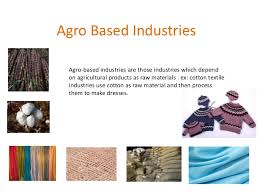
The agricultural produce of the state includes mustard, gram, peas and lentils besides groundnuts and mustard. While the latter two are used for the extraction of edible oils and a number of such food extracts to be used by human beings as well as animals there are several allied by products like soaps, detergents etc also.
Sugarcane is the major contributor towards the production of sugar especially as the state is the highest contributor towards the sugar production of the country. Along with these contributions the agri-sector also actively participates in the preservation and processing of potatoes and peas. The grains of wheat and rice besides the lentils like gram etc all have the potential for domestic as well as international use. Thus, the state of Uttar Pradesh has come a long way in the field of Food Processing. There are domestic and international participants in the various forms of food products like manufacturing juices, tinned food and various other raw, preserved or ready to each option.
Uttar Pradesh: industry
UP has witnessed rapid industrialization in the recent past, particularly after the launch of policies of economic Liberalization-2/”>Liberalization in the country. As of March 1996, there were 1,661 medium and large industrial undertakings and 296,338 small industrial units employing 1.83 million persons. The per capita state domestic product was estimated at Rs 7,263 in 1997–98 and there has been a visible decline in POVERTY in the state. However, nearly 40 percent of the total population lives below the Poverty Line.
There are numerous types of Minerals in the state and many industries have come up based on these minerals. There are a number of cement Plants in Mirzapur in the Vindhya region, a bauxite-based aluminium plant in the Banda region and Sonbhadra region. In the hilly regions of the state, many Non-Metallic Minerals are found which are used as industrial raw materials. Coal deposits are found in the Singrauli region. Nevertheless, the state is poor in mineral Resources. The only considerable deposits are of limestone in Mirzapur district. These are being extracted and are used largely in cement manufacture.
Uttar Pradesh has a booming electronics industry, especially in the UP-Delhi-NCR and Lucknow-Kanpur Corridors where many electronics units are produced.
Cottage industries, such as handloom and handicrafts, have traditionally provided livelihood to a large number of people in the state. These industries include:
- Varanasi is a world-famous centre of handloom woven, embroidered textiles; the main products are Zari-embroidery and brocade-work on silk sarees. Lucknow is a centre of ‘Chikan’ embroidery, renowned for its grace and delicacy, a skill more than 200 years old. Uttar Pradesh produces about 15% of the total fabric production of the country, employs about 30% of the total workforce of artisans in India and is responsible for an annual production of about $0.1 million USD in the state.
- Varanasi is well known for manufacturing the diesel-electric locomotives at Diesel Locomotive Works. The workshop at DLW is further upgraded to manufacture electric locomotives for Indian Railways. It is the largest diesel-electric locomotives manufacturer in India.
- The state has two major production centres of leather and leather products, with over 11,500 units; Agra and Kanpur are the key centres. About 200 tanneries are located in Kanpur.
- Moradabad is renowned for brass work and has carved a Niche for itself in the handicraft industry throughout the world. Lately, other products that are produced here like iron sheet metalwares, aluminium artworks, wood works and glasswares have become popular with the numerous foreign buyers, and are therefore being exported in large quantities. On an average Moradabad exports goods worth Rs. 30–40 billion each year, which constitutes 40% of total exports from India under this category.
- Meerut is one of the biggest gold market in Asia. It is one of the largest exporter of Sports related items and music instruments of the country.
- Bulandshahar is renowned for Khurja Pottery worldwide. There are nearly 23 export oriented units and they are exported to foreign countries such as the United Kingdom, USA, Australia, New Zealand, United Arab Emirates, and others. The Sikandrabad industrial area, developed by UPSIDC, has a large number of national and multinational companies working here successfully.
,
Agriculture and industry are two of the most important sectors of the economy in Uttar Pradesh. Agriculture is the primary source of livelihood for over 70% of the population, while industry contributes significantly to the state’s GDP.
Agriculture is important for Uttar Pradesh for a number of reasons. First, it is the primary source of food for the state’s population. Second, it provides EMPLOYMENT for a large number of people. Third, it is a major source of export earnings. Fourth, it helps to conserve the environment.
The major crops grown in Uttar Pradesh are wheat, rice, sugarcane, oilseeds, and pulses. Wheat is the most important crop, followed by rice. Sugarcane is the third most important crop, and it is grown in the western part of the state. Oilseeds are grown in the eastern part of the state, and pulses are grown in the central part of the state.
The challenges faced by agriculture in Uttar Pradesh include low productivity, lack of irrigation facilities, poor Infrastructure-2/”>INFRASTRUCTURE, and pests and diseases. The government has taken a number of initiatives to promote agriculture in the state, including providing subsidies on inputs, improving irrigation facilities, and building roads and other infrastructure.
Industry is also important for Uttar Pradesh. It contributes significantly to the state’s GDP and provides employment for a large number of people. The major industries in Uttar Pradesh are textiles, sugar, engineering, and pharmaceuticals.
The challenges faced by industry in Uttar Pradesh include poor infrastructure, lack of skilled manpower, and power shortage. The government has taken a number of initiatives to promote industry in the state, including improving infrastructure, providing subsidies, and setting up industrial parks.
Agriculture and industry are both important for the economy of Uttar Pradesh. The government has taken a number of initiatives to promote both sectors. However, there are still a number of challenges that need to be addressed in order to ensure the continued growth of these sectors.
One of the biggest challenges facing agriculture in Uttar Pradesh is low productivity. The state’s farmers are not able to produce as much food as they could if they had access to better technology and inputs. This is due in part to the fact that many farmers are still using traditional methods of farming. The government has taken some steps to address this issue, such as providing subsidies on agricultural inputs and training farmers on new technologies. However, more needs to be done to help farmers increase their productivity.
Another challenge facing agriculture in Uttar Pradesh is lack of irrigation facilities. Many farmers in the state do not have access to irrigation, which means that they can only grow crops during the monsoon season. This limits their ability to produce food year-round and makes them more vulnerable to droughts. The government has been working to improve irrigation facilities in the state, but more needs to be done to ensure that all farmers have access to irrigation.
Poor infrastructure is another challenge facing both agriculture and industry in Uttar Pradesh. The state’s roads, railways, and power supply are all in need of improvement. This makes it difficult for farmers to get their produce to market and for businesses to operate. The government has taken some steps to improve infrastructure, but more needs to be done.
Lack of skilled manpower is another challenge facing industry in Uttar Pradesh. The state does not have enough people with the skills needed to work in the manufacturing sector. This is due in part to the fact that the state’s Education system is not producing enough graduates with the right skills. The government has taken some steps to address this issue, such as setting up vocational training centers. However, more needs to be done to ensure that the state has a skilled workforce.
Power shortage is another challenge facing industry in Uttar Pradesh. The state’s power supply is not adequate to meet the needs of its industries. This is due in part to the fact that the state’s power plants are not operating at full capacity. The government has taken some steps to address this issue, such as building new power plants. However, more needs to be done to ensure that the state has a reliable power supply.
Despite these challenges, agriculture and industry are both important for the economy of Uttar Pradesh. The government has taken a number of initiatives to promote both sectors. However, there are still a number of challenges that need to be addressed in order to ensure the continued growth of these sectors.
Agriculture
-
What is agriculture?
Subscribe on YouTube