<–2/”>a >Print media generally refers to newspapers. Newspapers collect, edit and print news reports and articles.The Chinese were the first to invent the art of printing. They made wooden blocks to print letters. This was started during the period of the Tang Dynasty in 600 AD. The oldest known surviving printed work in a woodblock is a Buddhist scripture of 684 AD.It was during the British rule that Print Media established its root in India.
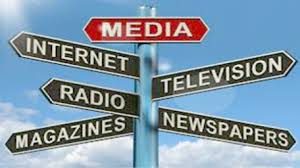
The mass Communication media such as radio, television, films, press and print publications, advertising and traditional modes of communication plays an important role in helping people to access free flow of information. In India the mass communication media emphasizes on facilitating entertainment needs of various age groups and focus attention of people on issues of national Integrity, environmental protection, Health care, family welfare, eradication of illiteracy etc.
Main issues faced by Print media are:-
- Media production is being democratized
- Media production is being atomized
- Media formats are converging
- Media is becoming social
- Media can be distributed from anywhere
- Media can be consumed everywhere
- Media is becoming hyper local
- Media is narrow casting
- Media has utility: search and linking
- Media Reproduction has zero marginal cost
Social and Electronic Media
- Social Media can be defined as any web or mobile based platform that enables an individual or agency to communicate interactively and enables exchange of user generated content and it is explained by a number of tools, which includes blogs, Wikis, discussion forums, micro-blogs, twitter and social networking sites. Internet has become a platform for coordination of plans of attack, communication with cells, or propaganda and information and spread of hate campaign or messages that can hurt the sentiments of people.
- Social Media in recent times has become synonymous with Social Networking sites such as Facebook or Micro Blogging sites such as Twitter.
- The advantages of Social media are so many but they are posing threat to Internal Security in various forms like Cyber Terrorism, Fraud, crime, spreading violence, etc.
- According to the Cisco 2013 Annual Security Report, the highest concentration of online security threats are on mass audience sites, including social media.
- The rapid spread of false information through social media is among the emerging risks identified by the World Economic Forum in its Global Risks 2013 Report.
- National Security is of prime importance for any nation to maintain peace and harmony. Nations face numerous internal security challenges and Social Media act as the platform for that. Social media is not security threat in itself but the users of these Services can pose the threats by their anti-social endeavours.
- With limited government oversight, Industry standards or incentives to educate users on security, privacy and identity protection, users are exposed to identity theft and fraud. Additionally, these platforms have huge confidential user information, and are likely vulnerable to outside or inside attack which is detrimental to Internal Security.
Different Internal Security threats due to Social Media are:
- Cyber Terrorism:
The biggest challenge for internal security of nation through social networking site is cyber terrorism.
Today terrorists select Social Media as a practical alternative to disturb the function of nations and other business activities because this technique has potential to cause huge damage. It poses enormous threat in international system and attracts the mass media, the security community, and the information technology corporation.
At the same time, due to the convenience, affordability and broad reach of social media platforms like YouTube, Facebook and Twitter, terrorist groups have increasingly used social media to further their goals and spread their message.
Social Media became a platform for coordination of plans of attack, communication with cells, or propaganda and information and spread of hate campaign or messages that can hurt the sentiments of people.
These groups now have their own websites where they can convey their propaganda and, for most of them, they advise their readers and followers not to trust the media which are seen as the enemy.
The chat service like Skype, which includes voice and video capabilities, has become particularly popular with terrorist cells. Chat rooms and electronic forums enable the insurgent and extremists groups to communicate with members and supporters all over the world, to recruit new followers and to share information at little risk of identification by authorities.
Youths are especially targeted for propaganda, incitement and recruitment purposes by terrorist groups.
- Fraud:
Social networking sites also invite fraudsters to take excellent opportunity to become wealthy by applying deceiver schemes.
- Criminal Activity and Money laundering:
Internet Media is a major resource for developing serious crime. As Internet is growing explosively, online criminals try to present fraudulent plans in many ways. Social networking sites also pose major challenge in financial and organized crime which destabilizes the system. It creates threat to a company’s security because of what employees might disclose and they are on prime target for cyber criminals.
- International users:
The other national and international users such as the Political Parties, NGO’s, hackers pose a serious threat using the social media. For example, during the civil turmoil in the Arab Spring Uprising, the various governments were threatened through the social media.
- To Bring Revolution:
Some countries in the world feel threatened by the fact that social media can bring the people together and thus, create a revolution. This in turn can cause political instability
- Communal Violence and Fanning Tensions:
Importantly, social media also seems to be playing a significant role in polarising different communities in India and compounding India’s Security challenges. The viral Videos and false updates of communal clashes, riots and terrorists attack have created a massive impact in the life of public.
The power of media and the process of public opinion formation in a free Society had undergone radical change due to Internet and faster means of communications like SMS, whats app, viber and simplified mobile internet. The chain of events beginning with the clashes in our North-east and which caused very serious and mass exodus of North-east Population from several Indian cities has revealed the fragility of our national Cohesion.
- Virtual Community:
Popular social networking websites are another means of attracting potential members and followers. These types of virtual communities are growing increasingly popular all over the world, especially among younger demographics. This can build Anti-national Sentiments among Society.
- Hacking:
Hackers write or use ready-made computer programs to attack the target computer. By using Social Media hackers breach the national security and steal important data of defence or other strategic sectors. This can kneel the whole country without using Arms and Ammunition.
Although social media has the potential to be a threat to national security, it also has the opportunity to strengthen National Security and to be used to benefit the Government.
One of the fastest growing ways that Governments are using social media is as a warning or trend prevention tool. As a monitoring tool, the government is able to recognize the first signs of any hostile or potentially dangerous activity by collecting and analyzing messages in order to try to predict events that could be a danger to National Security.
Another important use of social media by the government is as an institutional Communication Tool. Social Media provides a medium that creates cohesion between federal agencies by increasing both communication and transparency.
Press Council is a mechanism for the Press to regulate itself. The raison d’etre of this unique institution is rooted in the concept that in a democratic society the press needs at once to be free and responsible.If the Press is to function effectively as the watchdog of public interest, it must have a secure freedom of expression, unfettered and unhindered by any authority, organised bodies or individuals. But, this claim to press freedom has legitimacy only if it is exercised with a due sense of responsibility. The Press must, therefore, scrupulously adhere to accepted norms of journalistic ethics and maintian high standards of professional conduct.
The Press Council of India was first constituted on 4th July, 1966 as an autonomous, statutory, quasi-judicial body, with Shri Justice J R Mudholkar, then a Judge of The Supreme Court, as Chairman. The Press Council Act, 1965, listed the following functions of the Council in furtherance of its objects :
- to help newspapers to maintain their independence
- to build up a Code Of Conduct for newspapers and journalists in accordance with high professional standards
- to ensure on the part of newspapers and journalists the maintenance of high standards of public taste and foster a due sense of both the rights and responsibilities of Citizenship-2/”>Citizenship
- to encourage the Growth of a sense of responsibility and Public Service among all those engaged in the profession of journalism.
- to keep under review any development likely to restrict the supply and dissemination of news of public interest and importance
- to keep under review such cases of assistance received by any newspaper or news agency in India from foreign sources, as are referred to it by the Central Government.
,
The media plays a vital role in our society. It informs us about current events, helps us to understand different perspectives, and can even shape our opinions on important issues. In this ARTICLE, we will explore the impact of the media on policy making, public opinion, and Education.
The Impact of the Media on Policy Making
The media can have a significant impact on policy making. By reporting on issues and raising awareness of problems, the media can pressure policymakers to take action. For example, in recent years, the media has played a key role in raising awareness of Climate change. This has led to calls for action from policymakers around the world.
The media can also shape the way that policymakers think about issues. By framing issues in a certain way, the media can influence the way that policymakers view them. For example, if the media reports on a problem as being caused by a particular group of people, policymakers may be more likely to target that group with policies.
The Shaping of Public Opinion
The media can also shape public opinion by the way they report on issues. By choosing which stories to cover and how to cover them, the media can influence the way that people think about issues. For example, if the media only reports on negative stories about a particular group of people, it can create a negative stereotype about that group. This can lead to Prejudice And Discrimination.
The media can also shape public opinion by the way they present information. For example, if the media uses emotional language or images, it can evoke strong emotions in viewers. This can make people more likely to believe what the media is saying.
The Media’s Role in Education
The media can also play an important role in education. By providing information about current events, important issues, and new ideas, the media can help people to learn and grow. For example, the media can help people to understand complex issues like Climate Change or political Corruption.
The media can also help people to learn about different cultures and perspectives. By providing a platform for diverse voices, the media can help people to become more tolerant and understanding of others.
The Press Council of India
The Press Council of India is an independent body that was established in 1966 to uphold the freedom of the press and to ensure that the media is fair and responsible. The Press Council has the power to investigate complaints against the media and to issue guidelines for journalists.
The Press Council is important because it helps to ensure that the media is accountable to the public. By investigating complaints and issuing guidelines, the Press Council can help to prevent the media from abusing its power.
Conclusion
The media plays a vital role in our society. It informs us about current events, helps us to understand different perspectives, and can even shape our opinions on important issues. It is important to be aware of the impact of the media and to be critical of the way that it reports on issues.
Print and Electronic Media
-
What is print media?
Print media is a form of mass communication that uses printed materials, such as newspapers, magazines, and books, to inform, entertain, and educate the public. -
What is electronic media?
Electronic media is a form of mass communication that uses electronic devices, such as television, radio, and the internet, to transmit information to the public. -
What is the impact of print and electronic media on policy making?
Print and electronic media can have a significant impact on policy making. By informing the public about issues and providing a platform for debate, they can help to shape public opinion and influence the decisions that governments make. -
What is the impact of print and electronic media on shaping public opinion?
Print and electronic media can have a significant impact on shaping public opinion. By providing information and commentary on current events, they can influence the way that people think about issues and the way that they vote. -
What is the impact of print and electronic media on educating the people?
Join Our Telegram Channel