The Universe’s Mirror

  • CP Violation Confirmed in Baryons: CERN’s LHCb experiment has confirmed Charge-Parity (CP) violation in baryons, specifically the lambda-b (Λb) particle. This is the first discovery

    of CP violation in baryons to surpass the five-sigma statistical threshold.

  • What is CP Violation? It’s a difference in the behavior of matter and antimatter under combined charge conjugation (C) and parity transformation (P). Ideally, matter and antimatter should behave identically.

  • Lambda-b Baryon Decay: Scientists

    observed the lambda-b baryon decaying into a proton, a kaon, and two pions. A difference in decay rate between the lambda-b baryon and its antimatter counterpart signifies CP violation.

  • Matter and Antimatter Basics: Matter has mass and occupies space, composed of atoms and molecules. Antimatter consists of particles that are mirror counterparts of matter, with opposite electric charge.

  • Matter-Antimatter Interaction: When matter and antimatter collide, they annihilate each other, producing gamma rays.

  • Baryon Asymmetry Importance: The universe’s dominance of matter over antimatter (baryon asymmetry) remains a significant unsolved puzzle in physics.

  • Antimatter Uses: Positrons are used in PET scans for cancer detection. CERN produces nanograms of antimatter annually for research.

India’s Climate Beacon

  • India’s First Climate Change Station: Inaugurated in Nathatop, Jammu & Kashmir (J&K), at 2,250 meters above sea level.
  • Strategic Location: Chosen for clean air and minimal pollution, ideal for accurate atmospheric measurements.
  • Research Focus: Studies cloud formation, aerosol interactions, and weather patterns in the Himalayas.
  • ICE-CRUNCH Project: Launch of Indo-Swiss joint research to study Ice Nucleating Particles (INPs) and cloud condensation nuclei, crucial for climate modeling.
  • Global Significance: Enhances India’s role in climate science and supports net-zero emissions target (by 2070).
  • Gateway to Himalayan Climate Research: Facilitates cutting-edge climate research in the north-western Himalayas.
  • Collaboration: Involves Ministry of Earth Sciences, J&K Forest Department, Central University of Jammu, and Swiss National Science Foundation.
  • WMO Global Atmospheric Watch (GAW): Aims to become a long-term research hub affiliated with the program, integrating data into global climate models.
  • Capacity Building: Plans to train young scientists and develop climate modelling capabilities in India.
  • Economic Growth: Preserving Himalayas could unlock vast resources that could play a pivotal role in India’s future economic growth.
  • Addressing Climate Concerns J&K also joins India’s global headways in addressing the climate concerns.

Thar Desert

  • Greening Trend: The Thar Desert has experienced a 38% annual increase in greening over the past two decades.
  • Driving Factors: Increased monsoon rainfall and agricultural expansion are the primary drivers behind this greening trend.
  • Groundwater Impact: Groundwater contributes significantly to vegetation growth, accounting for 55% of the annual impact, compared to precipitation’s 45%.
  • Unique Desert: The Thar Desert is unique, showing a concurrent rise in population, rainfall, and vegetation in recent decades.
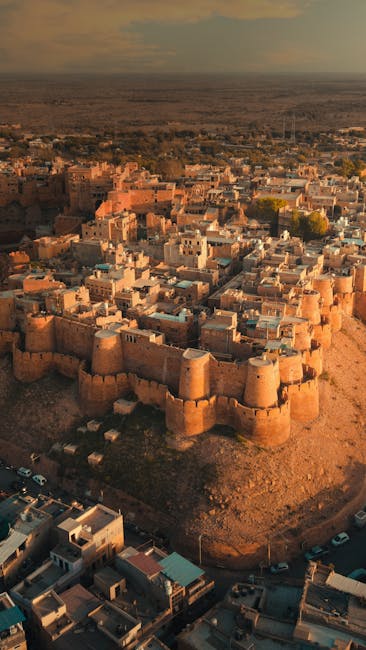
  • Location and Size: The Thar Desert, also known as the Great Indian Desert, is a large arid region in the northwestern part of the Indian subcontinent. It covers approximately 200,000 sq. km.
  • Boundaries: Bordered by the Sutlej River (northwest), Aravalli Mountain Ranges (east), Rann of Kutch (south), and Indus Valley (west).
  • Climate: The desert has extreme temperatures (hot summers, cold winters) with low rainfall (100-500 mm annually).
  • Mineral Rich: The Thar Desert is rich in minerals like coal, gypsum, limestone, salt, and bauxite.

Desert Rose

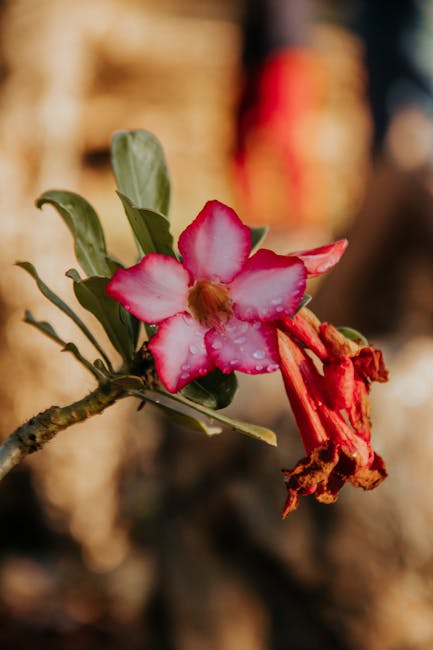
  • Cultivation in Tamil Nadu: Tiruvallur district is seeing increased cultivation of Adenium obesum, also known as Desert Rose.

  • Ornamental Popularity: The plant is gaining attention as a novel and ornamental houseplant.

  • Botanical Information: Adenium obesum is a succulent shrub belonging to the dogbane family (Apocynaceae).

  • Native Regions: Native to arid regions of Africa and the Arabian Peninsula.

  • Desert Adaptation: It thrives in desert or dry shrubland biomes.

  • Distinctive Features: Characterized by trumpet-shaped flowers and a swollen trunk for water storage.

  • Flower Characteristics: Flowers are fragrant, attract pollinators, and range in color from white to deep red.

  • Drought Tolerance: Known for its ability to survive long periods without rainfall.

  • Slow Growth: It is a slow-growing plant, adding only about 12 inches per year.

  • Bonsai Use: Also used in bonsai cultivation.

href="https://exam.pscnotes.com/punjab-notes-for-state-psc-exams/">PUNJAB (477)

Rafale-M: The Naval Rafale

  • Deal Approved: The Cabinet Committee on Security (CCS), chaired by the Prime Minister, approved a ₹63,000-crore deal to procure 26 Rafale-M fighter jets from France for the Indian Navy.
  • Contract Timeline: The contract is expected to be signed later this month (April 2025). Deliveries will begin 3.5 years after the contract is signed and complete in approximately 6.5 years.
  • Jet Composition: The deal includes 22 single-seater Rafale-M jets (carrier-compatible) and 4 twin-seater trainer variants (non-carrier compatible).
  • Operational Use: The jets will operate from India’s aircraft carriers, INS Vikramaditya and INS Vikrant.
  • Purpose: To enhance naval airpower, counter China’s naval capabilities in the Indo-Pacific, and replace aging MiG-29Ks.
  • Rafale-M Features: Naval variant of the Rafale fighter jet, with reinforced landing gear, tailhook for carrier landings, and foldable wings.
  • Controversies: Past concerns included allegations of procedural violations and high costs.
  • Make in India: Dassault-Reliance JV manufactures 30% of components domestically.
  • Background: The Indian Air Force already operates 36 Rafale jets acquired in a 2016 deal.
  • Naval Exercise: The Indian Navy observed the Rafale-M’s performance on the French aircraft carrier Charles de Gaulle during the Varuna exercise.
  • Further Deals: A separate deal for three additional Scorpene-class submarines is awaiting CCS approval.

Maternal Mortality Trends

  • Why in News: The UN’s “Trends in Maternal Mortality: 2000–2023” report highlights India’s maternal mortality trends.

  • India’s Contribution: India is the second-largest contributor to global maternal deaths (7.2%) after Nigeria. 19,000 maternal deaths were recorded in India in 2023.

  • India’s Progress: India’s MMR has decreased significantly, from 384 in 2000 to 80 in 2023, an 86% decline since

    1990, exceeding the global average.

  • Global Trends: Global MMR declined from 328 to 197 per 100,000 live births between 2000 and 2023 but the pace of progress has slowed.

  • Regional Disparities: Sub-Saharan Africa has the highest MMR (454), while Australia and New Zealand have the lowest. Significant variations exist within India as well, with some states lagging behind national average.

  • SDG Target: Achieving SDG target 3.1 (MMR below 70 by 2030) requires a much faster annual rate of reduction.

  • Concerns: Despite progress, India’s high absolute number of maternal deaths indicates gaps in healthcare access and quality.

  • Ministry’s Stand: The Union Health Ministry views comparing India’s MMR to Nigeria’s based on absolute numbers as misleading due to population differences.

  • Challenges: Access to skilled birth care in rural areas and the rise of NCDs like diabetes and hypertension contribute to maternal deaths. Humanitarian funding cuts are impacting essential healthcare.

  • Way Forward: Strengthen primary healthcare, focus on vulnerable regions, integrate policies with SDG 5 and 10, enhance

    data systems, and leverage digital platforms.

Critical Minerals

  • National Critical Mineral Mission (NCMM) Launched (2025): Aims for self-reliance in critical minerals, supporting India’s clean energy goals and national security.

  • Why Critical Minerals Matter: Essential for modern technologies (solar panels, wind turbines, EVs, energy storage) and defense. Supply chain vulnerabilities exist due to limited availability and geographical concentration.

  • India’s Identified Critical Minerals: 30 minerals listed, including lithium, cobalt, nickel, graphite, and rare earth elements (REEs).

  • Central Government Auctioning Powers: 24 minerals added to Part D of Schedule I of the MMDR Act, 1957, granting the Central Government exclusive auctioning rights.

  • Centre of Excellence for Critical Minerals (CECM): Established to regularly review the mineral list and guide policy.

  • Geological Survey of India (GSI) Role: Leading exploration efforts, with 1,200 projects planned (2024-25 to 2030-31), and following UNFC classification.

  • Domestic Exploration Boost: GSI intensifies exploration programs, including 195 projects in the 2024-25 field season, with a focus on critical mineral deposits. Over 100 critical mineral blocks are set to be auctioned.

  • International Cooperation: KABIL (Khanij Bidesh India Ltd) actively pursuing overseas mineral assets, including agreements with Argentina (lithium) and Australia (lithium, cobalt).

  • IREL (India) Limited’s Role: Processing beach sand minerals and operating Rare Earth Extraction and Refining Units, focused on expanding production capacity.

  • Mission Objectives: Secure mineral supply chain, strengthen value chains, encourage recycling, and promote innovation.

  • India’s Climate Goals: NCMM supports India’s targets

    of reducing emissions intensity by 45% by 2030, achieving 50% non-fossil electric power capacity by 2030, and reaching net-zero emissions by 2070.

Daulatabad

  • Fire at Daulatabad Fort: A significant fire erupted at Daulatabad Fort (also known as Devgiri Fort) in Maharashtra’s Chhatrapati Sambhajinagar district on April 8, 2025.

  • Damage Assessment & Disaster Management: The Archaeological Survey of India (ASI) has initiated damage assessment and is planning a disaster management strategy in response to the fire.

  • Extent of Damage: The fire scorched large areas of grassland and vegetation within the fort, raising concerns about the monument’s safety and ecological balance. The Baradari (pavilion at the summit) was also affected.

  • Impact on Wildlife: The fire disrupted local wildlife, with monkeys and peacocks observed scavenging for food in the charred areas,

    having lost significant portions of their habitat, especially the shrublands near the Mendha Cannon.

  • Challenges Faced: Firefighters faced challenges due to the fort’s steep terrain. Fort staff assisted in transporting water from the Moti tank.

  • Historical Significance: Daulatabad Fort is a UNESCO-nominated heritage site that served as the capital of multiple dynasties.

  • Disaster Preparedness: Authorities are prioritizing the development of a comprehensive disaster preparedness and response mechanism to safeguard the fort from future threats.

Mahavir Jayanti

  • Mahavir Jayanti Marked by Navkar Mahamantra Divas: Prime Minister inaugurated Navkar Mahamantra Divas on April 10, 2025, aligning Lord Mahavir’s teachings with the vision of ‘Viksit Bharat’.
  • Teachings as Global Solutions: PM Modi emphasized that Lord Mahavir’s principles of non-violence, truth, and compassion offer solutions to global issues like terrorism, war, and environmental degradation.
  • Ahimsa (Non-violence): Advocates for ending all forms of violence, aligning with the UN Charter, Gandhian ethics, and SDG 16.
  • Aparigraha (Non-possessiveness): Promotes sustainable lifestyles, aligning with Mission LiFE and SDG 12 to address environmental concerns.
  • Anekantavada (Many-sidedness): Encourages respect for diverse perspectives, resonating with constitutional morality and secularism.
  • Satya (Truth) and Asteya (Non-stealing): Promote transparency and integrity, guiding ethical business practices and aligning with ESG frameworks.
  • Government’s Commitment: The government is committed to preserving Jain teachings, including declaring Pali and Prakrit as classical languages.
  • Nine Pledges for Well-being: PM Modi urged citizens to adopt nine pledges encompassing water conservation, environmental action, promoting local products, domestic travel, natural farming, healthy lifestyles, helping the poor, and incorporating sports/yoga.
  • Jainism in New Parliament: The influence of Jainism, including idols of Tirthankaras, is visible in the new Parliament building.
  • Interdependence of Life: Jainism recognizes the interdependence of all life, prohibiting violence and offering lessons for peace, harmony, and environmental protection.

IPU Assembly #150

  • 150th IPU Assembly: Lok Sabha Speaker led the Indian delegation at the Inter-Parliamentary Union (IPU) Assembly in Tashkent, Uzbekistan.

  • India-Uzbekistan Ties: India and Uzbekistan share historical and cultural ties that should be deepened through collaboration in digital

    technologies, AI, renewable energy, and peaceful nuclear energy.

  • “Nari Shakti Vandan Act”: India emphasized inclusive democracy through the “Nari Shakti Vandan Act”, ensuring greater women representation.

  • “Vasudhaiva Kutumbakam” & “Sarvajan Hitaya”: India upholds universal values of “Vasudhaiva Kutumbakam” (The World is One Family) and “Sarvajan Hitaya” (For the Welfare of All).

  • Parliamentary Cooperation: Proposed regular parliamentary exchanges with Uzbekistan, Israel and Kazakhstan to share best practices and strengthen relations.

  • India-Uzbekistan Strategic Partnership: Focus on strengthening cooperation in economy, defense, education, and trade; India is now among Uzbekistan’s top 10 trade partners.

  • Uzbekistan Appreciation: Congratulated Uzbekistan for successfully hosting the 150th IPU Assembly.

  • India-Israel Partnership: Highlighted long-standing strategic partnership based on democratic values and collaboration in technology, agriculture, and defense.

  • India-Kazakhstan Relations: Proposed regular dialogues between parliaments to exchange best practices; acknowledged growing cooperation in defense, security, digital technology, energy, and space.

  • Tribute to Lal Bahadur Shastri: Lok Sabha Speaker and the Indian delegation paid floral tributes to former PM Lal Bahadur Shastri in Tashkent.