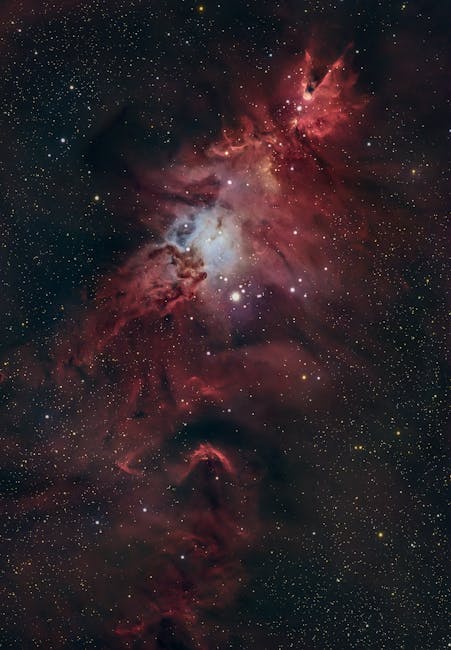
Possible Extraterrestrial Life Detection: JWST data suggests potential signs of life on exoplanet K2-18b (124 light years away), specifically the detection of dimethyl sulphide (DMS), a gas primarily produced by living organisms on Earth.
Significance of DMS: The amount of DMS detected on K2-18b is far greater than Earth’s levels.
JWST’s Role: JWST, launched in December 2021, made these observations, highlighting
JWST’s Capabilities: JWST is the largest and most powerful space observatory, a collaboration between NASA, ESA, and CSA. It orbits the L2 Lagrange Point (1.5 million km beyond Earth).
Infrared Observation: JWST primarily observes in the infrared spectrum, enabling it to see through cosmic dust and view early galaxies, unlike the Hubble Telescope which observes in visible and ultraviolet light.
JWST’s Objectives: JWST studies the formation of stars, galaxies, and planetary systems, and it is analysing exoplanet atmospheres.
JWST Components: Key components include the Optical Telescope Element (OTE), Integrated Science Instrument Module (ISIM), Sunshield, and Spacecraft Bus.
Carbon-Bearing Minerals Discovered: Curiosity Rover found carbonate mineral siderite (containing carbon and oxygen) in Martian rocks. This marks the first solid evidence of a carbon cycle on Mars.
Discovery Location: The find was made in an ancient lakebed in the Gale Crater, during exploration of an 89-meter stretch of terrain.
Siderite’s Significance: The rocks contain 5-10% siderite, suggesting a significant amount of Mars’ past CO₂ might be trapped in the crust.
Evidence of a Slow Carbon Cycle: The presence of iron oxyhydroxides indicates siderite may have dissolved in acidic water, releasing some CO₂ back into the atmosphere. This points to a limited and slow carbon cycle.
Curiosity’s Mission: Launched in 2011 as part of the Mars Science Laboratory (MSL), Curiosity aims to determine if Mars ever had conditions suitable for life, study its climate, and analyze its geology.
Crater in 2012, an area believed to have once contained water.
Power Source: The rover runs on a thermoelectric power generator that uses the radioactive decay of plutonium, instead of solar panels.
Objectives: Determine whether life ever existed on Mars, Characterise Mars’ past and present climate, Understand the geology of Mars and Prepare for future human exploration.
V2G Technology: Enables EVs to discharge power back to the grid, acting as decentralized energy storage.
Pilot Project: Kerala, in collaboration with IIT Bombay, has launched a project to explore V2G implementation.
Modes:
Grid-to-Vehicle (G2V): Charging EVs from the grid.
Vehicle-to-Grid (V2G): Discharging EV power back to the grid.
Need: Supports renewable energy integration, enhances grid stability, provides emergency power, and offers decentralized storage.
Global Adoption: U.S., U.K., and Netherlands are leading in V2G adoption, compensating EV owners for supplying power during peak demand. California encourages participation in grid stability services.
India’s Status: Early stages, focusing on EV charging infrastructure. CEA has formed a committee on reverse charging. Current market structure not suited for V2G.
KSEB-IIT Bombay Project Goals: Assess EV’s ability to support the grid during peak demand when solar energy is unavailable.
Benefits for Utilities: Smart charging and V2G integration can turn EV charging from a challenge to an advantage. Encourages EV charging during high solar generation times.
Regulatory Changes Needed: Supportive changes are required to mainstream V2G in India, given the variable nature of renewable energy.
Decarbonization through RE: V2G enables EVs to act as a storage source for excess solar generation, which can be used at night, thus enabling decarbonization with RE.
Grid Stability: V2G can modulate EV battery power to reduce the impact of variable RE on the grid.
India to Host IBCA Headquarters: India will host the headquarters and secretariat of the International Big Cat Alliance (IBCA), solidifying its leadership role in global big cat conservation efforts.
Agreement Signed: An official agreement has been signed between India and the IBCA, establishing the legal framework for the headquarters’ operation. The agreement includes provisions for visas, privileges, and immunities for IBCA personnel and premises.
Financial Commitment: India has pledged ₹150 crore (approximately $18 million USD) from 2023-24 to 2028-29 to the IBCA. This funding will establish a corpus fund, build infrastructure, and cover recurring expenses.
IBCA Objectives: The IBCA aims to conserve seven major big cat species: Tiger, Lion, Leopard, Snow Leopard, Puma, Jaguar, and Cheetah.
Formal Establishment: The IBCA is now a treaty-based intergovernmental organization after ratification by five countries: India, Nicaragua, Eswatini, Somalia, and Liberia. India formally joined IBCA in September 2023. The alliance formally became a global legal entity after five signatory countries ratified the IBCA framework agreement.
Implementation Agency: The IBCA is implemented through the National Tiger Conservation Authority (NTCA), under the Ministry of Environment, Forest and Climate Change (MoEFCC).
Membership Open: Membership is open to all UN Member States, including range countries (where big cats naturally occur) and non-range countries interested in supporting conservation.
Combating Threats: The IBCA will address poaching, illegal wildlife trade, and habitat loss. The IBCA aims to foster transboundary cooperation among range countries for big cat conservation.
Leveraging Expertise: India will leverage its Project Tiger experience to lead research, training, and conservation financing initiatives under the IBCA.
Rising Accidents: Metro cities face increasing accidental deaths and injuries involving pedestrians, cyclists, and vendors due to misuse of service lanes by motor vehicles.
Active Mobility Defined: Active mobility involves human-powered transport (walking, cycling, skateboarding) and micro-mobility (e-bikes).
Policy Focus: Active mobility is gaining attention with initiatives like the National Transit Oriented Development (NTOD) policy and the Smart Cities Mission (SCM)
PETA’s core mission: To end abusive treatment of animals in business and society.
Support for Trump Administration: PETA is commending the Trump administration for its policy changes aimed at ending animal testing in federal research programs.
FDA Initiatives: PETA praises the FDA’s steps toward adopting more ethical testing methods, such as organoids.
Four Focus Areas: PETA concentrates its efforts on areas where animals suffer the most: laboratories, food industry, clothing trade, and entertainment.
Methods of Operation: PETA employs public education, investigations, research, animal rescue, legislation, protests, and company negotiations.
Opposition to Speciesism: PETA opposes the human-supremacist worldview known as speciesism.
Official Recognition: Type 5 diabetes has been officially recognized by the International Diabetes Federation (IDF) at the 75th World Congress for Diabetes in Bangkok.
Definition: It affects lean, undernourished teenagers and young adults in low- and middle-income countries (LMICs).
Cause: Primarily caused by malnutrition-induced reduction in insulin production, unlike Type 2 diabetes which involves insulin resistance.
Pancreatic Function: Pancreatic beta cells function abnormally, resulting in severely reduced insulin secretion.
Historical Context: First reported in Jamaica in 1955 as J-type diabetes; WHO classified it as “malnutrition-related diabetes mellitus” in 1985 but removed it in 1999 due to a lack of causal evidence.
Global Prevalence: Estimated to affect about 25 million people globally, predominantly in the Global South (India, Sri Lanka, Bangladesh, Uganda, Ethiopia, Rwanda, Korea).
Key Markers:
Low BMI (<18.5 kg/m²)
Severely reduced insulin levels
Substantially lower body fat percentage
Inadequate dietary intake of protein, fibre, and micronutrients
No autoimmune or genetic causes
Malnutrition’s Role: Malnutrition, beginning in the womb, plays a critical role. Undernourishment during fetal development and early life can lead to Type 5 diabetes.
Treatment: Specific diagnostic criteria and therapeutic guidelines are still
being developed by the Type 5 Diabetes Working Group. Treatment involves a high protein diet and adequate carbs/fats to promote weight gain. Anti-diabetic medicine or insulin is considered on a case-by-case basis.
Philippines Balikatan Exercise: The Philippines has confirmed the deployment of the US Navy-Marine Expeditionary Ship Interdiction System (NMESIS) for the upcoming Balikatan military exercises. This is news as it shows increased military cooperation and highlights the strategic importance of anti-ship capabilities in the region.
NMESIS Overview: NMESIS is a land-based anti-ship missile system developed for the US Marine Corps (USMC). It’s designed to support naval operations through land-to-sea attacks.
Key Components:
Naval Strike Missile (NSM): The US Navy’s latest anti-ship missile, capable of engaging targets over 100 nautical miles (185 km) away. It can target both maritime and
land targets, uses advanced seeker technology for precision, and can evade radar.
ROGUE Fires Vehicle: An unmanned variant of the Oshkosh Joint Light Tactical Vehicle (JLTV), functioning as a Remotely Operated Ground Unit for Expeditionary (ROGUE) Fires vehicle. It’s remotely operated, highly mobile, and carries a high payload.
ROGUE Fires Features: It uses advanced autonomous vehicle tech, is remotely operated, lacks a crew cab, has sensors and cameras, and can be configured for different missions.
NSM Features: Multi-mission cruise missile. Range over 100 nm (185 km). Advanced seeker for precision. Maneuverability to evade radar, flying close to sea level. 226.79 kg warhead. Programmable fuse.
Not Autonomous: NMESIS isn’t fully autonomous. A marine is responsible for mission planning and firing the missile. The fire control system isn’t controlled by the self-driving system.
Sewerage Projects Approved (₹900+ Crore): Focus on Moradabad (UP), Arrah (Bihar), Kanpur (UP), and Pujali (WB) to intercept and treat sewage before it enters the Ganga and its tributaries like Ramganga. Aims to prevent untreated waste from polluting rivers.
Ramganga River Pollution Prevention (Moradabad): Project costs ₹409.93 crore and includes constructing 15 MLD and 65 MLD Sewage Treatment Plants (STPs). Also focuses on intercepting and diverting 5 major drains.
Sewerage Infrastructure in Arrah (Bihar): Includes a 47 MLD STP and a 19.5 km sewer network, costing ₹328.29 crore, using a Hybrid Annuity Model with 15 years of operation and maintenance.
Kanpur Drain Interception (₹138.11 Crore): Intercepts 14 major drains to divert
Faecal Sludge Treatment (Pujali, WB): Approves an Integrated Faecal Sludge Treatment Plant (FSTP) with 8 KLD capacity for improved urban sanitation.
Nature-Based Solution for Yamuna (Delhi): Installation of pilot CAMUS-SBT plants in Shahdara drain to meet NGT water quality standards. CAMUS-SBT plants will have capacities of 5 MLD.
IND-RIVERS Collaboratory: Collaboration between NMCG, IIT Delhi, and the Netherlands for intelligent river systems and urban river solutions. Focuses on action-oriented research.
Traditional Boat-Making Study: Approval for documenting traditional wooden boat-making craft in the Ganga basin.
DDA Biodiversity Parks as Knowledge Centers: Developing DDA Biodiversity Parks as Knowledge cum Skill Development Centres for river conservation (₹8.64 crore). Yamuna Biodiversity Park is the knowledge partner.
Overall Impact: Projects aim for pollution control, water conservation, preserving riverine heritage, and developing sustainable water management.
Record High Temperatures: Tanzania experienced its hottest year on record in 2024, with an average temperature of 24.3°C, 0.7°C above the long-term normal. This surpasses the previous record from 2023. This is important because it highlights the increasing impact of climate change.
Temperatures: Nighttime temperatures saw a significant increase, with the average minimum temperature reaching 19.3°C, 1.1°C above average. This is concerning as it affects human health and ecosystems.
Regional Variations: Northeastern Tanzania, including the Lake Victoria basin, highlands, and coastal areas, experienced the most significant nighttime warming (1°C to 2°C above average). This localized impact is relevant for regional planning and adaptation strategies.
Agricultural Impact: A 2017 TMA study warned that rising temperatures could negatively impact maize yields, a staple crop in Tanzania. This has implications for food security and livelihoods.
Geopolitical Significance: Tanzania is a key partner in India’s Africa outreach, particularly within IORA and India’s SAGAR vision. This highlights Tanzania’s strategic importance in regional cooperation and security.
Climate Trends: A Nature study projects increasing warm days and nights throughout the 21st century, underscoring the long-term challenge Tanzania faces.
Capital and Location: Dodoma is the official capital of Tanzania, an East African country bordering several nations and the Indian Ocean.