NEERI

  • Supreme Court Directive: NEERI has been directed by the Supreme Court to assess the impact of nearby glass industries on the Taj Mahal in Agra. This highlights NEERI’s role as a trusted environmental assessor for significant national concerns.

  • Government Research Institute: NEERI is a research institute established and funded by the Government of India. This underscores its credibility and responsibility in addressing environmental challenges.

  • Establishment and Focus: Founded in 1958 in Nagpur, NEERI initially focused on water supply, sewage disposal, communicable diseases, industrial pollution, and occupational diseases. This demonstrates its long-standing commitment to public health and environmental protection.

  • Pioneer in Environmental Science: NEERI is a pioneer laboratory in environmental science and engineering.

  • Mission: NEERI’s primary mission

    11.4 132.3c6.3 23.7 24.8 41.5 48.3 47.8C117.2 448 288 448 288 448s170.8 0 213.4-11.5c23.5-6.3 42-24.2 48.3-47.8 11.4-42.9 11.4-132.3 11.4-132.3s0-89.4-11.4-132.3zm-317.5 213.5V175.2l142.7 81.2-142.7 81.2z"/> Subscribe on YouTube
is to conduct research and development in environmental management, pollution control, and sustainable development. This clarifies the institute’s core purpose.

  • Ministry Affiliation: NEERI operates under the Ministry of Science and Technology.

  • Headquarters and Zonal Laboratories: NEERI’s headquarters are in Nagpur, with zonal laboratories in Chennai, Delhi, Hyderabad, Kolkata, and Mumbai.

  • Organizational Expertise: NEERI possesses expertise in climate/environment, health, lab or field testing, monitoring and evaluation, policy development, research, standards, technology, and fuel R&D.


  • Google CCI Settlement OK’d

    • CCI Approves Google’s Settlement: The Competition Commission of India (CCI) has approved Google’s settlement proposal regarding alleged anti-competitive practices in the Android TV market.
    • Case Background: The CCI alleged Google abused its dominant position in the Android TV market by bundling the Play Store with the Android TV OS and restricting alternative Android versions. This violated Section 19(1)(a) of the Competition Act, 2002.
    • CCI Findings: The CCI found Google dominant in both the Smart TV OS and App Store markets in India.
    • Settlement Terms: Google proposed a standalone license for its Play Store and Play Services for Android smart TVs, removing bundling requirements and allowing OEMs to develop non-Google Android devices.
    • Settlement Fee: Google will pay a settlement fee of ₹202.4 million (approximately $2.38 million).
    • Legal Basis: The settlement was approved under Section 48A(3) of the Competition Act, 2002, and the Competition Commission of India (Settlement) Regulations, 2024.
    • CCI’s Role: The CCI is a statutory body established in 2009 to enforce the Competition Act, 2002, aimed at preventing anti-competitive practices and promoting competition in India.
    • Impact: This settlement marks a significant resolution, potentially fostering greater competition and innovation in the Indian smart TV market.

    Carbon Market

    • ETS Defined: An Emissions Trading Scheme (ETS) is a market-based regulatory tool to reduce air pollution by incentivizing emission reductions through tradable permits. It sets a cap on total emissions.

    • How it works: Industries receive/purchase emission permits (“allowances”). Cleaner industries can sell excess permits to those exceeding limits. Called “cap-and-trade”.

    • Surat ETS Significance: World’s first ETS focused on particulate pollution (not CO2) and India’s first emissions market for any pollutant. Targeted 342 industries in Surat, primarily textiles.

    • Surat ETS Design: A cap on total particulate matter emissions was set and later tightened. Permits were issued, mostly for free initially, with auctions for a portion. Price floor and ceiling maintained stability.

    • Surat ETS Results: Plants under ETS reduced emissions more than those under conventional regulation, complied

      with permits. Non-ETS plants often failed to meet norms.

    • ETS Criticism:

      • Over-allocation of permits can keep prices low, hindering investment in cleaner tech.
      • Lobbying can delay tightening of caps.
      • Using emission intensity instead of absolute caps can be problematic.
      • Markets have sometimes disproportionately affected disadvantaged communities.
    • ETS Aim: To address monitoring and enforcement gaps in command-and-control systems by offering flexibility and incentives for compliance.

    KVIC: India’s Rural Engine

    • Record Turnover: Khadi and Village Industries (KVI) achieved a turnover exceeding Rs 1.7 lakh crore in FY24-25. Why: Signifies economic growth and increasing popularity/demand for KVI products.

    • Statutory Body: The Khadi and Village Industries Commission (KVIC) is a statutory body established in 1956. Why: Highlights its legal foundation and established role in the sector.

    • Under MSME Ministry: KVIC operates under the Ministry of Micro, Small, and Medium Enterprises. Why: Shows its connection to the government’s broader strategy for supporting small industries.

    • Development

      Mandate: KVIC plans, promotes, organizes, and implements programs for Khadi and village industries development. Why: Explains its core function and focus on rural development.

    • Key Objectives: Active rural community building, rural employment, saleable product production, and self-reliance for weaker sections. Why: Outlines KVIC’s social and economic goals.

    • Functions: Strategic raw material reserves, common service facilities, marketing support,

      R&D promotion, financial assistance, and quality assurance. Why: Demonstrates the wide range of activities undertaken by KVIC.

    • Major Schemes: PMEGP, MPDA, ISEC, Workshed Scheme, infrastructure strengthening, KRDP, SFURTI, and Honey Mission. Why: Lists key initiatives driving KVIC’s development efforts.

    Indo-Saudi Ties

    • Why in News: PM Modi’s state visit to Saudi Arabia and participation in the 2nd India-Saudi Arabia Strategic Partnership Council (SPC) meeting.

    • Key Outcomes:

      • Creation of two new Ministerial Committees under the SPC: Defence Cooperation and Tourism & Cultural Cooperation.
      • Saudi Arabia’s commitment to invest USD 100 billion in India across various sectors.
      • MoUs signed on space, health, anti-doping, and postal cooperation.
    • Developed Relations:

      • Diplomatic ties since 1947, elevated to a Strategic Partnership in 2010, and SPC formed in 2019.
      • India is Saudi Arabia’s 2nd largest trade partner, and Saudi Arabia is India’s 5th largest. Bilateral trade at USD 42.98 billion in FY24.
      • Saudi Arabia was India’s 3rd largest source of crude oil and LPG in FY24.
      • Joint military exercises and cultural exchange, including Haj quota for Indian pilgrims and recognition of Yoga.
    • Key Challenges:

      • Labour welfare concerns for Indian workers in Saudi Arabia.
      • Worsening trade deficit due to reliance on Saudi oil imports.
      • Regional instability and Saudi-Iran rivalry pose diplomatic challenges for India.
      • Saudi Arabia’s closer ties with China and Pakistan.
    • Areas for Strengthening Relations:

      • Green energy collaboration, especially in solar and green hydrogen.
      • Technology and innovation partnership in IT, AI, and FinTech.
      • Enhance the Strategic Partnership through IMEC.
      • Utilizing GCC Platforms for regional stability and peace efforts.

    Jwaneng’s Sparkle

    • Richest Diamond Mine: Jwaneng Diamond Mine in Botswana is the world’s richest diamond mine, valued at approximately €1 billion.
    • “Prince of Mines”: It’s nicknamed the “Prince of Mines” due to its significant diamond output.
    • Location: Situated in an ancient volcanic crater, 170 km southwest of Gaborone.
    • Operator: Operated by Debswana, a joint venture between De Beers and the Botswana government.
    • Kimberlite Pipe: The mine sits on a kimberlite pipe, a volcanic formation transporting diamonds from the Earth’s mantle.
    • Operational History: Discovered in the 1970s by De Beers, operating since 1982.
    • Production: In 2023, it produced 13.3 million carats.
    • Economic Impact: Has contributed significantly to Botswana’s economy, accounting for around 70% of Debswana’s earnings. Estimated revenue exceeds $96 billion since inception.
    • Advanced Mining: Employs advanced technologies, including large drills, X-ray, and laser sorters for diamond extraction.
    • ISO 14001 Certification: First in Botswana to receive ISO 14001 for eco-friendly practices.
    • Future Projects: The “Cut-9” project (€1.5 billion) aims to extend the mine’s life until at least 2035, yielding 53 million additional carats.
    • Underground Expansion: An approved underground expansion in January 2024 is expected to generate €20 billion and create thousands of jobs.
    • Responsible Mining: Praised for its responsible mining practices, with Debswana investing in local communities and wildlife preservation.

    Quantum Gradiometer

    • Why in News: NASA scientists propose deploying a Quantum Gravity Gradiometer (QGG) on a low-Earth orbit satellite.

    • Goal: To precisely monitor Earth’s subsurface mass distribution.

    • Potential Benefits: Aids climate studies and enhances national security.

    • What is a Gravity Gradiometer?: Measures variations in gravitational acceleration over a distance. Detects changes in gravitational force due to mass distribution. Faster fall indicates more mass below, slower fall indicates less.

    • What is a QGG?: Measures differences in gravitational acceleration at different points in space.

    • How it Works: Cools atoms to near absolute zero, manipulates them with lasers, and measures phase shifts sensitive to gravitational forces. Detects minute gravity variations (10⁻¹⁵ m/s²).

    • Applications:

      • Detects the gravitational pull of large landforms.
      • Tracks shifts in water, ice, and land masses for climate change studies.
      • Identifies underground resources (hydrocarbons, minerals, aquifers).
      • Monitors strategic infrastructure and geological threats for national security.
      • Detects buried ruins in archaeology.
    • Advancements: Boosts quantum sensors, satellite tech, and geophysics.

    Quantum Gravity Gradiometer

    • NASA proposes using Quantum Gravity Gradiometers (QGGs) on satellites: To monitor Earth’s changing mass distribution, particularly due to climate change effects.
    • QGGs leverage quantum principles: Atoms are cooled to near absolute zero and manipulated with lasers.
    • Detects minute gravitational changes: QGGs can measure acceleration differences as small as 10⁻¹⁵ m/s² over 1 meter.
    • High precision mapping: Enables precise monitoring of water, ice, and geological material movement from low Earth orbit.
    • Measures gravity gradients: QGGs measure the rate of change of gravitational acceleration.
    • Applications beyond climate: Useful in resource exploration (detecting oil/gas deposits) and detecting underground structures for geology, archaeology, and defence due to their high precision.
    • Atom interferometry: QGGs track ultracold atoms in free-fall, detecting phase shifts caused by gravity variations.

    Poás Volcano

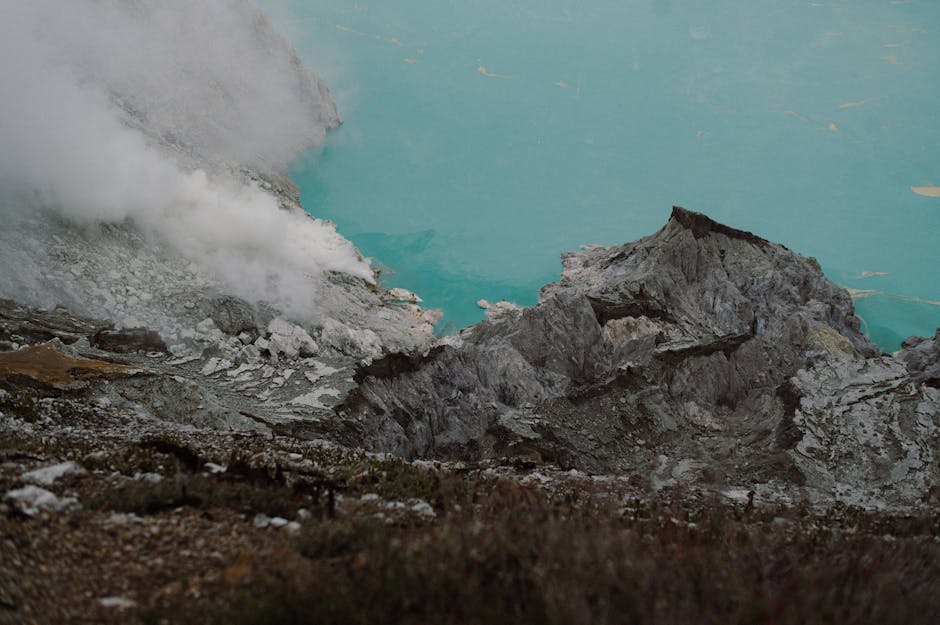
    • Recent Eruption: The Poás Volcano in Costa Rica, a popular tourist destination, has recently erupted. This is newsworthy because it impacts tourism and potentially surrounding areas.

    • Active Volcano: Poás is one of Costa

      Rica’s most active volcanoes. This highlights the ongoing geological activity in the region and potential for future eruptions.

    • Volcano National Park Location: Located within the Poás Volcano National Park. Its a composite stratovolcano with irregular complex form.

    • Crater Lake Drying: Throughout 2024, the volcano’s crater lake has been drying up, leading to ash eruptions and increased gas release. This is a significant change indicating heightened volcanic activity.

    • Small Explosions: Small explosions ejecting rocks have been observed. This poses a direct hazard within the immediate vicinity of the crater.

    • Increased Gas Emissions: Since 1989, the volcano has markedly increased gas emissions, causing acid rain that damages local flora and agriculture. This long-term effect has ecological and economic consequences.

    • Large Crater: The volcano’s main crater is

      about 1.5 km wide and 300 meters deep – one of the largest active craters in the world.

    Sudden Deluge

    • Ramban, J&K Recent Event: Ramban district experienced heavy rainfall and hail, causing significant damage.
    • Rainfall Surge: IMD recorded a 575% increase in rainfall (16.9 mm) compared to the normal (2.5 mm) in 24 hours.
    • Cloudburst Definition: A cloudburst is defined as 10 cm or more of rainfall in one hour over a 10 km x 10 km area, or 5 cm in 30 minutes over the same area.
    • Orographic Lift: Cloudbursts are frequent in mountainous regions due to orographic lift, where warm, moist air rises, cools, and releases precipitation.
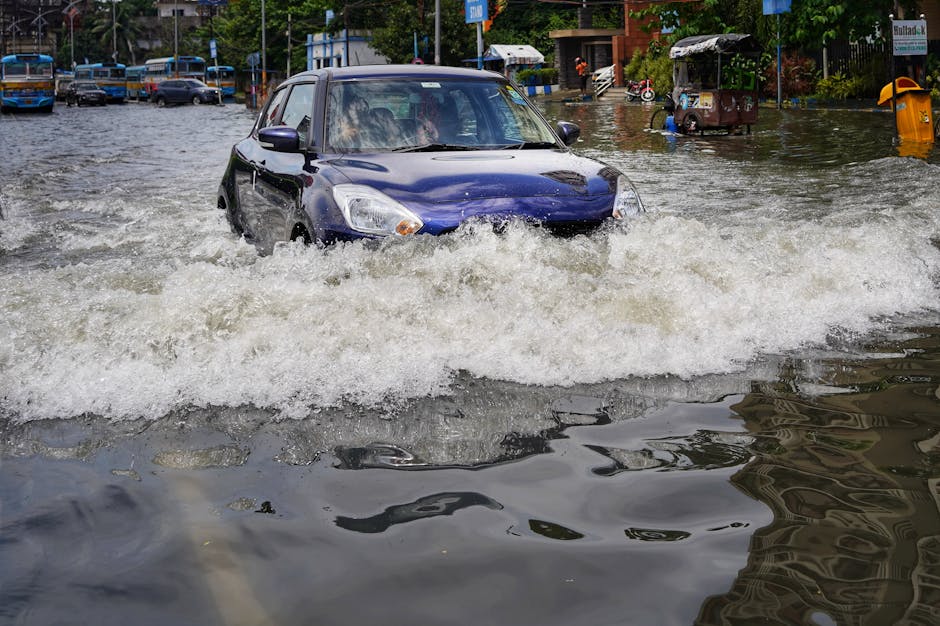
    • Flash Floods: Sudden inundation from excessive rainwater overwhelming drainage systems, common in hills due to poor water absorption by rocky terrain. Flash floods are often deadly.
    • Landslides: Movement of rock/debris down a slope when gravity exceeds resistance. Heavy rain increases weight and reduces cohesion, increasing landslide risk. Can cause fatalities, disrupt transportation and block rivers.
    • Forecasting Challenges: Cloudbursts are difficult to forecast due to their localized nature.
    • Cloudburst Causes sudden condensation of moisture-laden clouds, enhanced by topography.