-
What: The Cosmology Education and Research Training Center (COSMOS), Mysuru, observed ‘Zero Shadow Day’ (ZSD).
-
Why: ZSD is a celestial phenomenon where the sun is directly overhead, causing vertical objects to cast no shadow. This happens twice a year for locations between the Tropic of Cancer and Tropic of Capricorn.
-
How Observed: COSMOS conducted demonstrations and experiments using Gnomons (Shanku Yantra) where participants measured shadow lengths, observed sunspots, and calculated the sun’s declination.
-
Occurence: ZSD happens when the Sun’s declination aligns with a location’s latitude. Mysuru experiences ZSD on April 22 and August 19.
-
Who experiences: Locations between the Tropic of Cancer and Capricorn will experience ZSD twice a year.
-
Why is it important: This phenomenon showcases the Earth’s axial tilt and its orbit around the sun, impacting the angle of sunlight throughout the year and affecting shadow direction and length. It offers an opportunity for public engagement with astronomy and scientific observation.
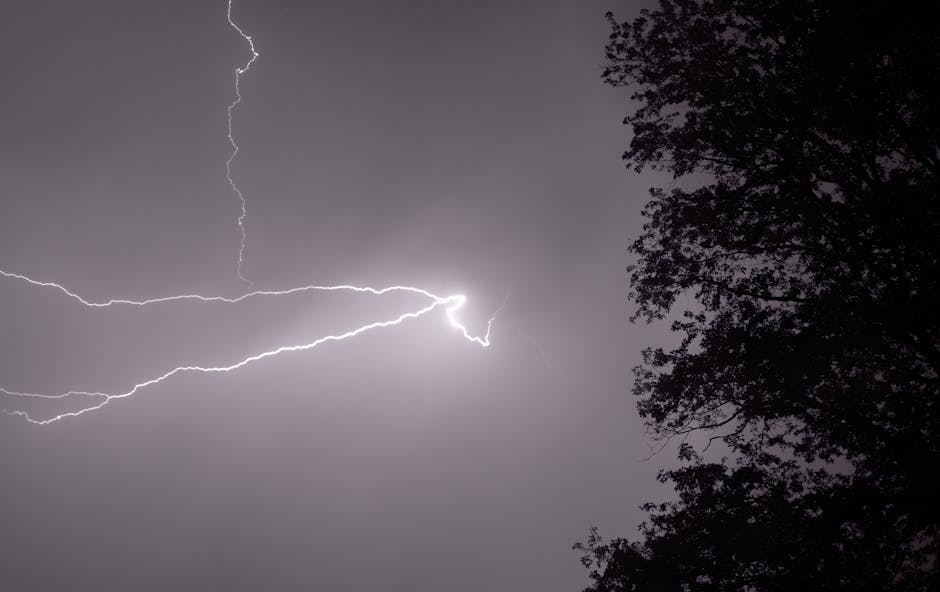
Lightning
- Surge in Lightning Deaths: India saw a 184% increase in lightning-related deaths across 12 states during March-April 2025 compared to the same period in 2024 (162 deaths in 2025 vs 57 in 2024), making it the deadliest spell since 2022.
- April Spike: The first 17 days of April 2025 alone accounted for 142 deaths, a fivefold increase over April 2024.
- Unstable Weather: The rise is attributed to unstable atmospheric conditions caused by humid easterly winds from the Bay of Bengal interacting with western disturbances.
- Avoidable Deaths: Experts believe many fatalities are preventable with improved preparedness and public awareness.
- Lightning Defined: Lightning is a rapid discharge of electrical energy in the atmosphere, occurring within or between clouds, or between a cloud and the ground.
- Thunder’s Origin: Thunder is the sound created by the rapid heating and expansion of air around a lightning strike.
- NCRB Data: Lightning accounts for a significant portion of natural disaster deaths in India (35.8% in 2022), exceeding those from heavy rains and landslides.
- Leading States: Madhya Pradesh and Bihar have the highest number of lightning-related deaths in India (2014-2024).
- Pollution’s Role: Air pollution (aerosols, particulate matter) can affect cloud formation and electrical activity in storms, potentially increasing lightning strikes.
- Urbanization Impact: Urban heat island effect can create localized heat, contributing to more thunderstorms and lightning.
Giant of the Deep
- First Live Image: Researchers captured the first-ever video of a live juvenile colossal squid in its natural habitat (2,000 feet deep in the South Atlantic) since its identification in 1925. Footage released April 15.
- Elusive Nature: Colossal squids are difficult to spot due to their large, sensitive eyes and avoidance of bright, loud research equipment. Limited knowledge exists about their diet, lifespan, and reproduction.
- Limited Knowledge Source: Most information comes from dead specimens found in whales/seabirds or young ones in trawl nets.
- Colossal Squid Traits: Largest known invertebrate, reaching up to 14m (23 feet) and 500 kg. Found in Antarctic waters, deep-sea predator feeding on large fish and other squids. IUCN status is Least Concern.
- Distinctive Features: Massive eyes (largest in animal kingdom), powerful swivelling hooks on tentacles.
- Comparison to Giant Squid: Colossal squids have shorter arms/tentacles compared to the longer, more slender giant squid.
- Size Advantage: Large size reduces predation and increases prey options. Only Sperm Whales prey on them at full maturity.
- Significance of Sighting: The video footage provides valuable data to understand the colossal squid’s life cycle, habitat, and behavior. It can also inform decisions about deep-sea activities like mining.
- Filling Knowledge Gaps: Sighting the juvenile can help fill some of the missing puzzle pieces to the life history of this very mysterious animal.
CCS
- Recent News: The Cabinet Committee on Security (CCS) convened to discuss national security matters. The announcement was made by Foreign Secretary Vikram Misri after a 2.5-hour meeting chaired by PM Modi.
- Purpose: The CCS is responsible for discussions, debates, and decisions on defense policy, expenditure, and national security matters, including appointments to national security bodies.
- Composition: Headed by the Prime Minister, it includes the Ministers of Home Affairs, Defence, Finance, and External Affairs. The National Security Advisor (NSA) acts as the secretary-level coordinator.
- Functions: It deals with defense, foreign affairs, intelligence, nuclear issues, space policy, major appointments related to national security, law and order, and internal security. The CCS also deliberates on policy matters concerning foreign affairs on security-related issues and atomic energy.
- Cabinet Committees: Extra-constitutional bodies designed to reduce the Union Cabinet’s burden by focusing on specific policy areas. There are eight cabinet committees, with most headed by the PM.
- Historical Significance: CCS meetings have been called during major events like wars with Pakistan, the Kargil conflict, and the Kandahar hijack, demonstrating its role in critical decision-making.
- Decision Making: The CCS resolves issues, formulates proposals for the Cabinet, and makes decisions on assigned matters. The Cabinet can review these decisions.
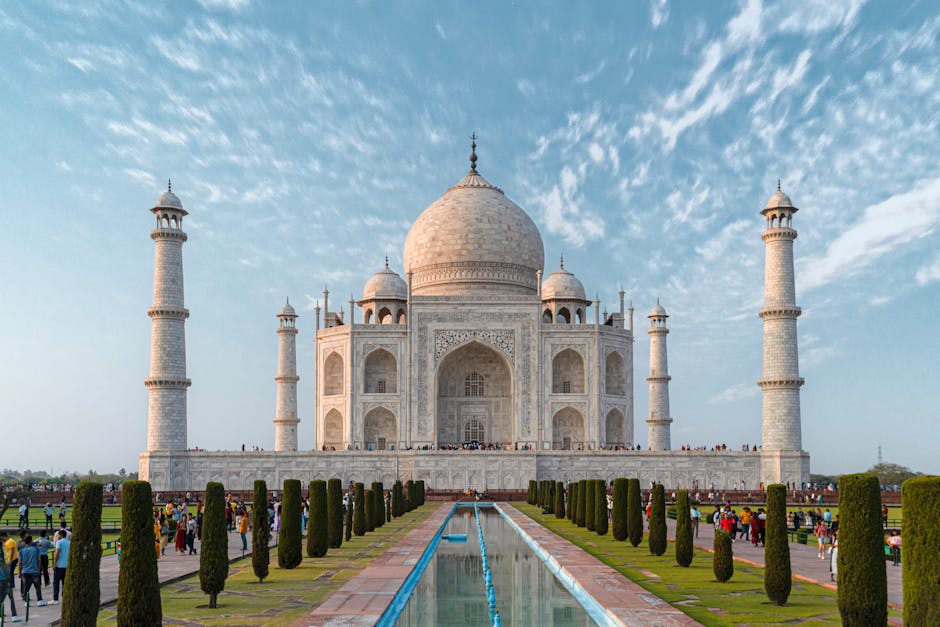
Taj Mahal Protection
- SC Directive to NEERI: The Supreme Court has directed NEERI to assess the environmental impact of glass industries near the Taj Mahal.
- Concerns over Industrial Pollution: This stems from growing worries about pollution within the Taj Trapezium Zone (TTZ) and its effect on the monument.
- Potential Relocation: The SC indicated it would order the removal of polluting industries if NEERI’s assessment is adverse.
- UPPCB Involvement: The UP Pollution Control Board has been directed to form a team to inspect highlighted industrial units and submit an interim report on pollutant production.
- Court’s Frustration: The Supreme Court has previously criticized the TTZ authority’s ineffectiveness in protecting the Taj Mahal’s environment.
- TTZ Purpose: The TTZ was established to protect the Taj Mahal from pollution, encompassing a 10,400 sq km area.
- Past Efforts: Previous SC judgments banned coal/coke use in TTZ industries, mandating cleaner fuels.
- Threats to Taj: The Taj Mahal faces threats from vehicular emissions, industrial pollution, biomass burning, construction, and untreated sewage, leading to discoloration of the marble.
- Inadequate TTZ Authority: A parliamentary report highlighted the TTZ Authority’s lack of resources and effectiveness.
- Need for Stronger Measures: Recommendations include flue gas recirculation in glass industries, transition to clean energy, integrated traffic management, stronger TTZ authority, and relocation of polluting industries.
Dhubri-Phulbari Bridge
-
Construction Progress: 59% of the 19.3 km Dhubri-Phulbari Bridge is complete. This indicates steady advancement towards project completion.
-
Strategic Importance: The 4-lane bridge connects Dhubri, Assam, and Phulbari, Meghalaya, on NH 127B. Its significance lies in improving connectivity between Northeast India and the rest of the country.
-
Length and Structure: With a total length of 19.3 km, the bridge features a 12.625 km navigation bridge and approach viaducts (3.5 km on the Dhubri side, 2.2 km on the Phulbari side), supported by 199 pillars. It’s poised to be the longest river bridge in India.
-
Reduced Travel Time: The bridge will drastically cut travel distance by over 200 km between Phulbari and Dhubri. This translates to faster and more efficient transportation for people and goods.
-
Project Details: Larsen & Toubro
(L&T) is handling the civil construction for the National Highways & Infrastructure Development Corp Ltd. (NHIDCL). Funding is provided by the Japan International Cooperation Agency (JICA). -
Cost: The project is estimated to cost Rs 3165.99 crore. This is a substantial investment demonstrating the commitment to improving infrastructure in the region.
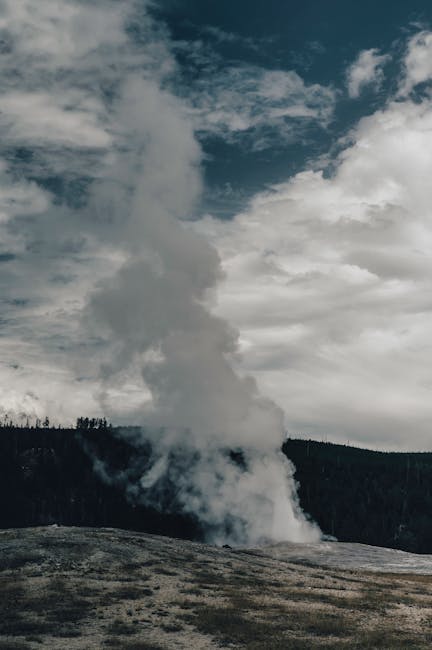
Yellowstone’s Fury
-
Magma Cap Discovery: A “breathing” cap of magma has been found inside the Yellowstone supervolcano. This could help scientists predict future eruptions.
-
Location: Yellowstone supervolcano is located beneath Yellowstone National Park in the western United States.
-
Size & Type: It’s one of the world’s largest active volcanic systems, characterized as a caldera (a large crater) and an active supervolcano. The caldera is 55 x 72 km (34 x 45 miles) in size.
-
Formation: The caldera formed from the collapse of land after massive pyroclastic eruptions emptied the magma chamber beneath.
-
Past Eruptions: Yellowstone has had three major eruptions: 2.1 million, 1.3 million, and 640,000 years ago. Two of these qualify it as a supervolcano.
-
Supervolcano Definition: A supervolcano is defined by eruptions of more than 1,000 cubic kilometers of deposits.
-
Potential Impact: A future supereruption could blanket North America in ash, with areas near the volcano potentially covered by over a meter of debris.
-
Climate Effects: Supervolcanoes can cause global cooling for several years due to sulfur dioxide released into the atmosphere, which blocks sunlight.