Sagaing Fault

  • Myanmar Earthquake Cause: Recent earthquakes in Myanmar are attributed to strike-slip faulting along the Sagaing Fault.
  • Tectonic Boundary: The Sagaing Fault is a major, active tectonic boundary separating the Indian and Eurasian Plates.
  • Location and Extent: It runs north-south through Myanmar, stretching 1,500 km from the Andaman Sea to the Eastern Himalayas.
  • Type of Fault: It’s a right-lateral strike-slip fault, characterized by horizontal movement of fault blocks.
  • Plate Movement: The northward movement of the Indian Plate causes stress buildup along the fault.
  • Earthquake Mechanism: Accumulated stress releases energy as seismic waves, leading to earthquakes.
  • Seismic Activity: The fault is one of the most seismically active regions in Southeast Asia.
  • Strike-Slip Faults: Characterized by horizontal movement with minimal vertical displacement, common at transform boundaries.
  • Importance: Understanding the Sagaing Fault is crucial for assessing earthquake risk in Myanmar and surrounding regions.

India’s Air Pollution Crisis

  • Air Pollution Crisis: India faces a severe and persistent air pollution crisis with significant health, economic, and environmental impacts.
  • Pollution Levels: India ranks as the 5th most polluted country globally, exceeding WHO safe limits by 10 times. Delhi is the most polluted capital, and Indian cities dominate the list of most polluted urban centers.
  • Health Impact: Air pollution caused 2.1 million deaths in India in 2021, leading to respiratory and cardiovascular diseases.
  • Economic Loss: Air pollution reduces GDP growth by impacting productivity, increasing health costs, and decreasing asset efficiency. It also reduces solar power efficiency, potentially causing significant electricity losses.
  • Environmental Degradation: Air pollution contributes to climate change, degrades ecosystems, and threatens biodiversity through acid rain, toxin buildup, and crop yield reduction.
  • Diverse Causes: Sources include industries, vehicles, biomass burning, construction, and seasonal factors like stubble burning.
  • Policy Gaps: Weak enforcement of existing regulations (BS-VI, PMUY, FAME) and inadequate monitoring hinder progress.
  • Financial Constraints: Limited funding and outdated technologies slow down pollution control efforts.
  • Over-Reliance on Technology: Excessive focus on high-tech solutions (smog towers) while neglecting major pollution sources.
  • Behavioral Barriers: Public resistance to green technologies, reliance on solid fuels, and low awareness impede progress.
  • Coordination Issues: Weak inter-state cooperation and seasonal pollution spikes complicate enforcement efforts.
  • Way Forward:
    • Decentralized, data-driven governance: Empower local bodies and use real-time emissions tracking.
    • Technological and structural reforms: Balance innovation with systemic changes like renewable energy transition.
    • Learning from global best practices: Adopt clean energy strategies (China), integrate waste workers (Brazil), and reinvest pollution fines (California).
    • Sector-specific pollution control: Strengthen public transport, enforce vehicle scrappage, tighten industrial emission norms, improve waste management, and promote alternatives to crop residue burning.
    • Behavioral change: Raise awareness and involve communities in monitoring and advocating for sustainable practices.
  • Conclusion: Addressing air pollution requires strong political will, scientific solutions, collective action, and integration into urban planning, public health, and economic growth strategies.
href="https://exam.pscnotes.com/punjab-notes-for-state-psc-exams/">PUNJAB (477)

Public Disclosure of Judges Assets

  • SC Judges to Publicly Declare Assets: Prompted by the discovery of large sums of cash at a Delhi High Court judge’s residence, the Supreme Court has decided its judges will publicly declare their assets. The disclosures will be made to the CJI and then published on the court’s website.

  • No Legal Mandate: Currently, there is no law requiring judges to publicly disclose their assets.

  • Past SC Resolutions: A 1997 resolution mandated declaration to the CJI only, not the public. A 2009 decision allowed voluntary disclosure on the SC website.

  • RTI Applicability: A 2019 ruling stated judges’ assets are not

    “personal information,” potentially making them accessible under the RTI Act.

  • Low HC Compliance: As of March 2025, only 13% of High Court judges (97 out of 770) have publicly declared assets.

  • HC Resistance: Several High Courts (Allahabad, Rajasthan, Bombay, Gujarat, Andhra Pradesh, Uttarakhand) have strongly opposed public disclosure and RTI requests.

  • Comparison to Other Public Servants: Civil servants (under AIS Conduct Rules) and political candidates must declare assets. MPs/MLAs and Union Ministers also have asset declaration requirements. This difference in treatment has raised questions of equality and accountability.

The public disclosure of judges’ assets aims to increase transparency and accountability within the judiciary, aligning it with standards expected of other public servants.

HYPERSONIC MISSILES

  • Russian Nuclear Submarine “Perm” Launched: Equipped with hypersonic Zircon missiles as standard, marking a significant advancement for the Russian navy.
  • Putin’s “Milestone” Assessment: The launch of the Perm is considered a crucial event for strengthening Russia’s naval capabilities.
  • Hypersonic Missile Definition: These weapons travel at Mach 5 or higher (≥ 6,174 km/h), characterized by speed, maneuverability, and rapid strike potential.
  • Maneuverability Advantage: Trajectory can be altered mid-flight, evading missile shields and early warning systems more effectively than ballistic missiles.
  • Detection Challenges: Ground-based radars have difficulty detecting them early, complicating interception efforts.
  • Strategic Applications: Hypersonic weapons offer responsive, long-range strike options against defended or time-critical targets.
  • Kinetic Energy Destruction: Conventional versions utilize kinetic energy to destroy targets, including hardened facilities.
  • Two Main Types: Hypersonic Glide Vehicles (HGVs) and Hypersonic Cruise Missiles (HCMs) employ different propulsion methods. HGVs glide after rocket launch; HCMs use scramjets.
  • Zircon Missile Capabilities: Russia claims it reaches Mach 8, has a range of 625 miles, and can carry a 660-pound warhead, making it exceptionally difficult to defend against.

INDIA’S THREE-STAGE NUCLEAR PROGRAMME

  • Rajya Sabha Debate: Congress MP Jairam Ramesh questioned the progress of India’s three-stage nuclear program, specifically Phase 2 (Fast Breeder Reactors) and Phase 3 (Thorium Reactors).
  • Historical Context: India’s nuclear program began soon after independence, with Asia’s first research reactor, Apsara, in 1956, followed by a nuclear power plant in Tarapur in 1969.
  • Visionaries: Dr. Homi J. Bhabha and Dr. Vikram Sarabhai envisioned the three-stage program to ensure India’s energy security.
  • Stage I (PHWRs): Uses natural uranium as fuel and heavy water as moderator/coolant. Produces plutonium-239 as a byproduct, essential for Stage II.
  • Stage II (FBRs): Uses plutonium from Stage I and natural uranium. “Breeds” more fissile material than it consumes, converting uranium-238 into more plutonium. The Prototype Fast Breeder Reactor (PFBR) at Kalpakkam is a key component, though facing delays.
  • Stage III (Thorium Reactors): Aims to utilize India’s large thorium reserves. Thorium-232 is converted into uranium-233 through neutron irradiation. Envisions Advanced Heavy Water Reactors (AHWRs) and molten salt reactors.
  • Long-Term Goal: To achieve sustained nuclear power generation primarily using thorium, reducing reliance on imported uranium and paving the way for a self-reliant nuclear energy program.

Aqueduct

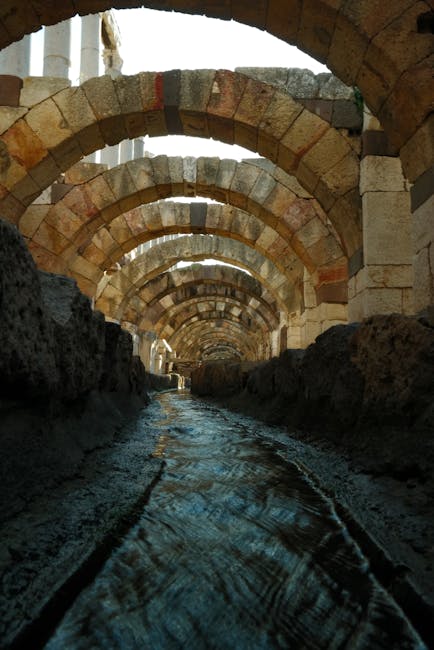
  • Ancient Roman Aqueduct Discovery: Archaeologists unearthed a Roman aqueduct near Rusovce Manor in Bratislava, Slovakia. This highlights the sophisticated engineering of the Roman era.
  • Aqueduct Definition: Aqueducts are structures designed to transport water over long distances using pipes, canals, tunnels, and other systems. The word origin is Latin.
  • Historical Significance: Aqueducts were crucial for the development of areas lacking easy access to fresh water. Ancient civilizations in India, Persia, Assyria, and Egypt used them, but the Romans are renowned for their advanced aqueduct systems.
  • Roman Aqueduct System: Between 312 BCE and 230 CE, the Romans built an extensive network of aqueducts to supply water to Rome.
  • Modern Aqueducts: The term “aqueduct” now includes various water transportation systems, not just bridges. The longest modern aqueduct is the Central Arizona Project in the United States.

Comptroller and Auditor General (CAG)

  • CAG Report on Delhi Air Pollution: Highlights concerns regarding air quality monitoring, vehicular pollution, and government accountability in Delhi.

  • Inaccurate Air Quality Data: Air quality monitoring stations in Delhi do not meet CPCB requirements, rendering AQI values unreliable due to inadequate data and lack of lead measurement.

  • Lack of Pollution Control: Discrepancies in PUC certification, a dysfunctional fitness certificate system for commercial vehicles, and failure to implement parking rules.

  • No Government Inspection: Absence of government inspections of pollution checking centers or third-party audits.

  • Constitutionally Mandated Auditor: CAG is appointed under Article 148 of the Indian Constitution and audits government accounts to ensure financial accountability, guarding the public purse.

  • Report Tabled: The report was tabled in the Delhi Assembly after being unaddressed by the previous AAP government.

  • Political Reactions: Opposition parties allege the previous AAP government failed to enforce pollution control measures, while AAP claims the report found no corruption in their environmental

    policies.

  • Role and Responsibility: The CAG audits expenditures from the Consolidated Fund of India, examines government corporations, certifies net proceeds of taxes, and submits audit reports to the President for parliamentary review.

Postage Stamp on Mata Karma Bai

  • Commemorative Postage Stamp Released: The Department of Posts issued a postage stamp honoring Mata Karma on her 1009th birth anniversary (March 25, 2025).

  • Who was Mata Karma? An 11th-century saint (born 1017 AD) and Krishna devotee, known for her unwavering faith.

  • Khichdi Offering: She is best known for offering khichdi to Lord Krishna in Puri, a tradition that continues at Jagannath Temple. This selfless devotion led her to

    get blessings of Lord Krishna.

  • Jagannath Temple Connection: The stamp depicts Mata Karma offering khichdi with the Jagannath Temple in the background. This temple (12th-century) is dedicated to Lord Jagannath (Vishnu).

  • Significance: Mata Karma’s life inspires social harmony, women’s empowerment, and religious devotion. She promoted unity and harmony in society.

  • Availability: The stamp, First Day Cover (FDC), and Information Brochure are available at Philately Bureaus across India and online.

Naini Lake

  • Five-Year Low Water Level: Naini Lake recorded a water level of 4.7 feet, the lowest in five years.

  • Water Extraction: The Uttarakhand Jal Sansthan extracts 10 million liters of water daily from the lake for the city’s drinking water supply.

  • Increased Pressure: Population growth, tourism, and commercialization are impacting the lake’s health, with the lake meeting 76% of the city’s water demand in 2024.

  • Aging Infrastructure: Nainital’s aging water distribution network struggles to meet the demand.

  • Man-Made Manipulation: Naini Lake faces the greatest man-made pressures compared to other Kumaon lakes, including unplanned construction, encroachment, and degradation of recharge zones.

  • Siltation and Encroachment: Dumping debris in Sukhatal Lake and encroachments reduce the lake’s catchment area.

  • Pollution: Untreated wastewater, improper solid waste disposal, and sewage overflow pollute the lake.

  • Climate Change Impact: Rising temperatures affect rainfall and snowfall patterns, with decreased precipitation and snowfall days.

  • Increased Zero Level Incidents: The lake

    has reached zero level more frequently since 2000 compared to the 1900s due to intense rainfall and reduced land seepage capacity.

  • Construction Concerns: Construction continues despite bans, including homestays and construction on wetlands.

  • Sukhatal Lake Project: Concerns regarding the concretization of Sukhatal Lake’s bed led to a temporary suspension of construction.

  • Need for Ecosystem-Based Approach: Conservation plans lack an ecosystem-based approach, and rejuvenation of natural processes should be prioritized over tourism.

Energy Statistics India 2025

  • Report Release: The National Statistics Office (NSO) released the annual “Energy Statistics India 2025” publication. It is available on the Ministry of Statistics and Programme Implementation website.

  • Data Focus: The report provides integrated data on energy reserves, capacity, production, consumption, and import/export across energy commodities (coal, petroleum, renewables, etc.).

  • New Addition: Includes a new chapter on Energy Account, aligned with the System of Environmental Economic Accounting (SEEA) 2012 framework, including asset accounts and physical

    supply/use tables for FY23 and FY24.

  • TPES Growth: India’s Total Primary Energy Supply (TPES) grew by 7.8% in FY24, reaching 903,158 KToE.

  • Renewable Energy Potential: India has a renewable energy potential of 2,109,655 MW, with wind power (55%) as the largest contributor. Rajasthan, Maharashtra, Gujarat, and Karnataka hold over 50% of this potential.

  • Renewable Capacity Increase: Installed renewable electricity capacity grew from 81,593 MW (March 2015) to 198,213 MW (March 2024), a CAGR of 10.36%.

  • Renewable Generation Rise: Electricity generation from renewables rose from 205,608 GWh (FY15) to 370,320 GWh (FY24), a CAGR of 6.76%.

  • Per Capita Consumption Growth: Per capita energy consumption increased from 14,682 MJ (FY15) to 18,410 MJ (FY24), a CAGR of 2.55%.

  • T&D Losses Reduced: Transmission and Distribution losses reduced from 23% (FY15) to around 17% (FY24).

  • Industrial Sector Consumption: The industrial sector is the largest energy consumer, with demand rising from 242,418 KToE (FY15) to 311,822 KToE (FY24).