FLUORIDE CONTAMINATION

  • Problem: Excessive fluoride contamination in groundwater affecting nearly 2 lakh people in 120 hamlets of Uttar Pradesh, particularly in Sonbhadra district.

  • Cause: Natural leaching of fluoride from granite, an igneous rock, into groundwater.

  • Definition: Fluoride contamination occurs when fluoride levels in water exceed safe limits (0.5 – 1.5 mg/L as per WHO).

  • Geographical Scope: This is a widespread issue, also present in Rajasthan, Gujarat, Andhra Pradesh, Telangana, Karnataka, and Madhya Pradesh.

  • Sources of Contamination:

    • Natural: Weathering of fluoride-rich rocks and volcanic activity.
    • Industrial: Emissions from industries like aluminum, steel, and fertilizer production.
    • Agricultural: Use of phosphate fertilizers and pesticides.
    • Coal combustion: Burning coal releases fluoride.
  • Health Impacts:

    • Dental fluorosis: Tooth enamel damage and discoloration in children.
    • Skeletal fluorosis: Crippling bone and joint damage.
  • Prevention & Control:

    • Water treatment methods: Activated alumina filters, Reverse Osmosis (RO) filtration, and the Nalgonda Technique (low-cost).
href="https://exam.pscnotes.com/haryana-notes-for-state-psc-exams/">HARYANA (512)


Delay in Decisions of Anti-Defection Cases

  • Judiciary’s Stance: The Supreme Court (SC) asserts it can intervene when Speakers delay anti-defection decisions, emphasizing that the judiciary isn’t “powerless.”

  • Anti-Defection Law (ADL): Introduced to curb political defections, promote party discipline, and ensure stable governments. The law disqualifies legislators for voluntarily leaving their party, voting against party whips, or independent/nominated members joining parties after elections.

  • Speaker’s Role & Problem: The Speaker acts as a quasi-judicial authority in deciding disqualification cases but lacks a specified deadline, leading to delays.

  • Impact of Delay: Undermines democracy by enabling defectors to continue in office, distorts the popular mandate, erodes political morality, and paralyzes governance. It also stalls re-elections.

  • Ruling Party Advantage: Delays often benefit the ruling party, allowing them to consolidate power through defections.

  • Needed Reforms:

    • Statutory Time Limit: Implement a time-bound framework (e.g., 90 days) for Speakers to decide disqualification petitions.
    • Independent Adjudication: Shift decision-making to a neutral tribunal or the Election Commission.
    • Limit Whip’s Scope: Restrict whip enforcement to crucial motions.
    • Encourage Political Ethics: Promote internal party dialogue and dissent.

Fluoride

  • Excessive Fluoride in Uttar Pradesh: 120 hamlets in Uttar Pradesh, India, are affected by excessive fluoride levels, impacting approximately 2 lakh people. Some villages recorded fluoride levels exceeding the safe limit of 1-1.5 mg/L, reaching 2 mg/L or higher.

  • Health Risks: High fluoride consumption can lead to skeletal fluorosis, accelerated dental decay, and other health problems, particularly affecting children.

  • Groundwater Contamination: Besides fluoride, India’s groundwater is also contaminated with arsenic (primarily in West Bengal, Bihar, Jharkhand, and Uttar Pradesh), uranium (across 12 states including Punjab), and iron (severe in Rajasthan, Jharkhand, and Assam). Other contaminants like antimony, cadmium, copper, and barium pose risks.

  • Worst Affected States: Rajasthan has the highest fluoride contamination levels in India. Other affected states include Telangana, western Andhra Pradesh, and eastern Karnataka.

  • Seasonal Variation: Fluoride contamination tends to increase during the dry, summer pre-monsoon months. Arid regions in western India show higher contamination compared to humid areas.

  • Safe Limits: The World Health Organization (WHO) recommends a safe fluoride limit of 1.5 mg/L

    in drinking water, while the Bureau of Indian Standards (BIS) sets the limit at 1.0 mg/L.

Public Disclosure of Judges Assets

  • SC Judges to Publicly Declare Assets: Prompted by the discovery of large sums of cash at a Delhi High Court judge’s residence, the Supreme Court has decided its judges will publicly declare their assets. The disclosures will be made to the CJI and then published on the court’s website.

  • No Legal Mandate: Currently, there is no law requiring judges to publicly disclose their assets.

  • Past SC Resolutions: A 1997 resolution mandated declaration to the CJI only, not the public. A 2009 decision allowed voluntary disclosure on the SC website.

  • RTI Applicability: A 2019 ruling stated judges’ assets are not “personal information,” potentially making them accessible under the RTI Act.

  • Low HC Compliance: As of March 2025, only 13% of High Court judges (97 out of 770) have publicly declared assets.

  • HC Resistance: Several High Courts (Allahabad, Rajasthan, Bombay, Gujarat, Andhra Pradesh, Uttarakhand) have strongly opposed public disclosure and RTI requests.

  • Comparison to Other Public Servants: Civil servants (under AIS Conduct Rules) and political candidates must declare assets. MPs/MLAs and Union Ministers

    also have asset declaration requirements. This difference in treatment has raised questions of equality and accountability.

The public disclosure of judges’ assets aims to increase transparency and accountability within the judiciary, aligning it with standards expected of other public servants.

Soft Power of US and India

US Soft Power Decline:

  • Driven by “America First” policies, leading to weakened alliances (NATO, AUKUS), strained ties with Global South due to unconditional support for Israel.
  • Reduced humanitarian engagement due to USAID funding cuts and closure of institutions.
  • Unstable trade and immigration policies, including protectionist measures and tighter immigration controls, damage US image.
  • Decline in appeal of US higher education due to crackdown on protests and funding cuts.

India’s Soft Power Strengths:

  • Rich cultural influence through yoga, Ayurveda, Bollywood, and spiritual traditions.
  • Strong diaspora connections and historical ties, particularly in Asia and Africa.
  • Democratic model and Gandhian ideals inspire developing nations.
  • Economic and technological growth, leadership in IT, and vaccine diplomacy during COVID-19.
  • Education and knowledge exchange through IITs, IIMs, and training programs like ITEC.
  • Humanitarian aid and disaster relief, exemplified by Operation Brahma and assistance to Sri Lanka.
  • Active participation in multilateral forums (UN, WHO, BRICS, G20).

Challenges to India’s Soft Power:

  • Institutional gaps and poor coordination among organizations like ICCR and AYUSH.
  • Limited utilization of multilateral platforms like UNESCO and BRICS.
  • Inadequate financial resources compared to countries like China and the US.
  • Lack of a formal study on global best practices in soft power promotion.
  • Underutilized diaspora in shaping international perceptions.
  • Passive approach to public diplomacy compared to proactive efforts by countries like China.

Way Forward for India:

  • Develop a comprehensive national strategy for cultural diplomacy.
  • Restructure institutions like ICCR and enhance coordination.
  • Leverage multilateral platforms for cultural diplomacy.
  • Learn from international best practices in soft power promotion.
  • Involve the Indian diaspora in advocacy and policymaking.

BAY OF BENGAL INITIATIVE FOR MULTI-SECTORAL TECHNICAL AND ECONOMIC COOPERATION (BIMSTEC)

  • Ambitious Approach Needed: EAM Jaishankar urged BIMSTEC to adopt a more ambitious approach, given the evolving global order that is becoming increasingly regional and agenda-specific. This suggests a need for BIMSTEC to be more proactive and impactful in addressing regional challenges and opportunities.

  • India’s Central Role & Connectivity: Jaishankar highlighted India’s crucial role, particularly its northeastern region, in establishing transport and connectivity linkages within BIMSTEC. This emphasizes India’s commitment to facilitating regional integration and infrastructure development.

  • Meeting Context: The foreign ministers’ meeting in Bangkok served as preparation for the upcoming BIMSTEC Summit.

  • BIMSTEC’s Core Purpose: It aims to foster economic and technical cooperation among countries bordering the Bay of Bengal, bridging South and Southeast Asia.

  • Membership: BIMSTEC includes Bangladesh, Bhutan, India, Nepal, Sri Lanka, Myanmar, and Thailand.

  • Origin & Structure: Established in 1997, it operates through a rotational chairmanship and consensus-based decision-making. The permanent secretariat is in Dhaka.

  • Charter Adoption: The BIMSTEC Charter was adopted in 2022, providing the organization with a legal framework.

  • Key Objectives: Focus on economic growth, social progress, trade and investment, transport and connectivity, regional security, technical collaboration, and sustainable development.

class="table-cell">TAMILNADU (524)

Euphaea wayanadensis

  • New Damselfly Species Discovered: Euphaea wayanadensis, a new damselfly species, has been identified in the Wayanad region of the Western Ghats, Kerala.
  • Significance for Kerala & Western Ghats: The discovery brings Kerala’s recorded odonate (damselfly and dragonfly) species count to 191 and the Western Ghats’ total to 223.
  • Published Research: The findings were published in the journal ENTOMON.
  • Initial Misidentification: The species was initially mistaken for Euphaea pseudodispar. Detailed study and genetic analysis confirmed its unique identity.
  • Distinguishing Features: Key morphological differences include a longer black patch on the hind wing, broader humeral and antehumeral stripes in males, and a unique male genital structure.
  • Habitat Preference: Euphaea wayanadensis thrives in fast-flowing streams with rocky beds and aquatic vegetation within evergreen and semi-evergreen forests.
  • Restricted Distribution & Vulnerability: The species has a highly restricted distribution, making it vulnerable to habitat loss and climate change. It is active year-round, except during the dry seasons.
  • Ecological Importance: Damselflies, including Euphaea wayanadensis, serve as indicators of freshwater ecosystem health due to their sensitivity to water pollution.
  • Discovery Location: First observed in the Kalindi River, Thirunelli, Wayanad, Kerala. Later sightings occurred in Aralam (Kannur, Kerala) and Coorg (Karnataka).

India’s Air Pollution Crisis

  • Air Pollution Crisis: India faces a severe and persistent air pollution crisis with significant health, economic, and environmental impacts.
  • Pollution Levels: India ranks as the 5th most polluted country globally, exceeding WHO safe limits by 10 times. Delhi is the most polluted capital, and Indian cities dominate the list of most polluted urban centers.
  • Health Impact: Air pollution caused 2.1 million deaths in India in 2021, leading to respiratory and cardiovascular diseases.
  • Economic Loss: Air pollution reduces GDP growth by impacting productivity, increasing health costs, and decreasing asset efficiency. It also reduces solar power efficiency, potentially causing significant electricity losses.
  • Environmental Degradation: Air pollution contributes to climate change, degrades ecosystems, and threatens biodiversity through acid rain, toxin buildup, and crop yield reduction.
  • Diverse Causes: Sources include industries, vehicles, biomass burning, construction, and seasonal factors like stubble burning.
  • Policy Gaps: Weak enforcement of existing regulations (BS-VI, PMUY, FAME) and inadequate monitoring hinder progress.
  • Financial Constraints: Limited funding and outdated technologies slow down pollution control efforts.
  • Over-Reliance on Technology: Excessive focus on high-tech solutions (smog towers) while neglecting major pollution sources.
  • Behavioral Barriers: Public resistance to green technologies, reliance on solid fuels, and low awareness impede progress.
  • Coordination Issues: Weak inter-state cooperation and seasonal pollution spikes complicate enforcement efforts.
  • Way Forward:
    • Decentralized, data-driven governance: Empower local bodies and use real-time emissions tracking.
    • Technological and structural reforms: Balance innovation with systemic changes like renewable energy transition.
    • Learning from global best practices: Adopt clean energy strategies (China), integrate waste workers (Brazil), and reinvest pollution fines (California).
    • Sector-specific pollution control: Strengthen public transport, enforce vehicle scrappage, tighten industrial emission norms, improve waste management, and promote alternatives to crop residue burning.
    • Behavioral change: Raise awareness and involve communities in monitoring and advocating for sustainable practices.
  • Conclusion: Addressing air pollution requires strong political will, scientific solutions, collective action, and integration into urban planning, public health, and economic growth strategies.

North Sentinel Island

  • U.S. National Arrested: A U.S. citizen was recently arrested for allegedly illegally entering the prohibited tribal reserve of North Sentinel Island. This is a key point because it highlights ongoing attempts to breach the island’s protected status.

  • Location and Geography: North Sentinel Island is part of the Andaman and Nicobar Islands, located in the Bay of Bengal. The island is approximately 8km long and 7km wide, roughly 60 sq km in area, densely forested, and surrounded by a shallow reef. Understanding the geography gives context to the tribe’s isolation.

  • Sentinelese Tribe: The island is home to the Sentinelese, one of the world’s last uncontacted tribes, believed to be descendants of early humans from Africa.

    This is the core reason for the island’s significance; the tribe’s unique status requires protection.

  • Voluntary Isolation and Resistance: The Sentinelese have maintained voluntary isolation for thousands of years and fiercely resist contact with the outside world. This resistance justifies the protective measures in place.

  • Legal Protection: The Andaman and Nicobar Protection of Aboriginal Tribes Act, 1956, prohibits approaching the island closer than 5 nautical miles. This law is crucial to prevent unwanted contact and protect the Sentinelese from outside diseases and exploitation.

  • Population Estimate:

    The Sentinelese population is estimated to be between 80 and 150 people (possibly ranging from 15 to 500). Accurately assessing the population is very difficult due to the lack of contact.

  • Prohibited to Visit: It is illegal for outsiders, including Indian citizens, to visit North Sentinel Island or attempt contact with the Sentinelese. This reiterates the strict enforcement aimed at protecting the tribe.

Combating Synthetic Drug Trafficking in India

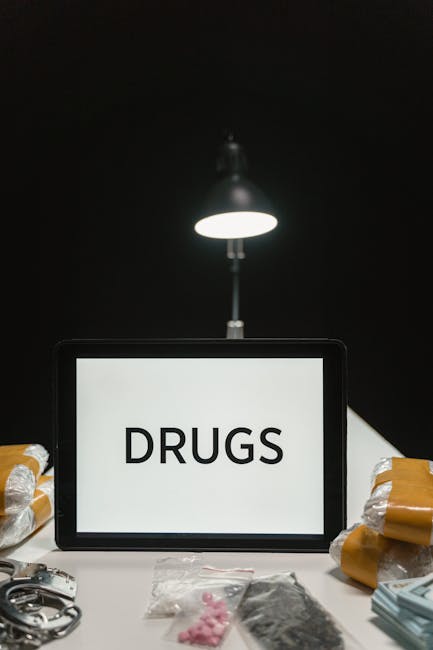
  • Surge in Synthetic Drug Trafficking: India faces a growing problem with synthetic drugs, prompting responses like Haryana’s Anti-Synthetic Narcotics Task Force.

  • Synthetic Drug Definition: Lab-created drugs using precursor chemicals, unlike plant-based narcotics. Examples include amphetamines and ecstasy.

  • Concerns:

    • Rapid Innovation: New psychoactive substances (NPS) circumvent the NDPS Act.
    • Ease of Production: Small, hidden labs use easily available precursors.
    • Detection Difficulty: Disguised in legitimate shipments, bypassing traditional methods.
    • Dark Net Usage: Traffickers use cryptocurrencies and blockchain, complicating tracking.
    • High Potency: Drugs like fentanyl cause fatal overdoses and mass addiction.
  • Global Influence: India’s location between the Golden Crescent and Golden Triangle and API production exacerbate the problem. Online forums aid synthesis.

  • Reforms Needed:

    • Legislative Modernization: Amend NDPS Act for generic scheduling and fast-track NPS classification.
    • National Precursor Control Network: Real-time tracking of precursor chemicals with AI alerts.
    • Digital Surveillance: Use blockchain forensics to trace cryptocurrency payments.
    • International Coordination: Leverage UN conventions and collaborate with INTERPOL.
    • Health and Awareness: Expand de-addiction infrastructure (NAPDDR) and targeted awareness campaigns (NMBA).
  • Why Harder to Regulate: Synthetic drugs are harder

    to regulate because of rapid innovation, the ease of production in small labs, their high potency leading to fatality, and are usually trafficked in disguise, using dark net, etc.