Dhubri-Phulbari Bridge

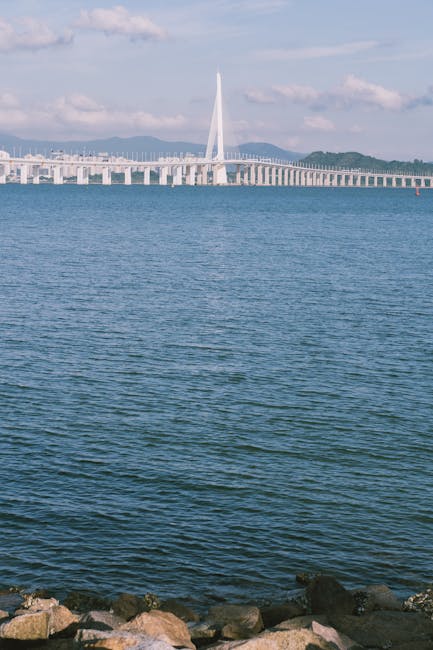
  • Construction Progress: 59% of the 19.3 km Dhubri-Phulbari Bridge is complete. This indicates steady advancement towards project completion.

  • Strategic Importance: The 4-lane bridge connects Dhubri, Assam, and Phulbari, Meghalaya, on NH 127B. Its significance lies in improving connectivity between Northeast India and the rest of the country.

  • Length and Structure: With a total length of 19.3 km, the bridge features a 12.625 km navigation bridge and approach viaducts (3.5 km on the Dhubri side, 2.2 km on the Phulbari side), supported by 199 pillars. It’s poised to be the longest river bridge in India.

  • Reduced Travel Time: The bridge will drastically cut travel distance by over 200 km between Phulbari and Dhubri. This translates to faster and more efficient transportation for people and goods.

  • Project Details: Larsen & Toubro (L&T) is handling the civil construction for the National Highways & Infrastructure Development Corp Ltd. (NHIDCL). Funding is provided by the Japan International Cooperation Agency (JICA).

  • Cost: The project is estimated to cost Rs 3165.99 crore. This is a substantial investment demonstrating the commitment to improving infrastructure in the region.

Yellowstone’s Fury

  • Magma Cap Discovery: A “breathing” cap of magma has been found inside the Yellowstone supervolcano. This could help scientists predict future eruptions.

  • Location: Yellowstone supervolcano is located beneath Yellowstone National Park in the western United States.

  • Size & Type: It’s one of the world’s largest active volcanic systems, characterized as a caldera (a large crater) and an active supervolcano. The caldera is 55 x 72 km (34 x 45 miles) in size.

  • Formation: The caldera formed from the collapse of land after massive pyroclastic eruptions emptied the magma chamber beneath.

  • Past Eruptions: Yellowstone has had three major eruptions: 2.1 million, 1.3 million, and 640,000 years ago. Two of these qualify it as a supervolcano.

  • Supervolcano Definition: A supervolcano is defined by eruptions of more than 1,000 cubic kilometers of deposits.

  • Potential Impact: A future supereruption could blanket North America in ash, with areas near the volcano potentially covered by over a meter of debris.

  • Climate Effects: Supervolcanoes can cause global cooling for several years due to sulfur dioxide released into the atmosphere, which blocks sunlight.

CBIC

  • Trade Facilitation Measures: CBIC introduced measures to enhance logistics efficiency and simplify customs procedures for Air Cargo and Transhipment, aligning with Union Budget 2025-26 goals.
  • Transhipment Permit Fee Waived: Effective April 24, 2025, the transhipment permit fee is waived for all transhipment movements to ease business operations and reduce delays, as per Notification No. 30/2025-Cus (N.T).
  • Temporary ULD Removal: Simplified procedure introduced for temporary import of Unit Load Devices (ULDs) outside Customs areas for high-value or perishable cargo, aligning with international best practices.
  • Continuity Bond for Air Carriers: Air carriers/air console agents can now temporarily import ULDs by executing a Continuity Bond, taking responsibility for re-export within a specified timeframe.
  • All-India National Transhipment Bond: The ‘All-India National Transhipment Bond’ facility, operational since 2022, avoids multiple bond submissions at different Customs stations.
  • Online Transhipment Application: Online filing of transhipment applications is enabled in ICEGATE, eliminating the need to visit service centers.
  • Aim: These measures aim to ease compliance and facilitate trade at Air Cargo complexes, encouraging Airlines, Console Agents, and stakeholders to utilize the facilities.
  • CBIC Role: CBIC administers Customs, Central Excise, CGST, IGST, and Narcotics (where applicable), formulating policies related to indirect tax levy and collection. It manages customs at various international locations and is headed by a Chairman.
  • Statutory Body: CBIC operates under the Central Boards of Revenue Act, 1963, making it a statutory authority.

The Bite of Malaria

  • World Malaria Day (April 25): Observed annually, promoting global action against malaria. The 2025 theme is “Malaria Ends With Us: Reinvest, Reimagine, Reignite,” emphasizing innovation, collaboration, and sustained commitment.
  • India’s Progress: Achieved an 80.5% decline in malaria cases between 2015-2023 and a 78.38% reduction in deaths over the same period, exiting WHO’s High Burden to High Impact (HBHI) group in 2024.
  • India’s Targets: Aims for zero indigenous malaria cases by 2027 and full elimination by 2030.
  • Key Strategies: “Test, Treat, Track” approach, intensified malaria elimination projects (IMEP), and vector control measures (mosquito nets, repellents). National Framework for Malaria Elimination (2016–2030) and National Strategic Plan (2023–2027) guide efforts.
  • Malaria Basics: Caused by Plasmodium parasites transmitted via Anopheles mosquitoes. Symptoms include fever, chills, and headache, appearing 10-15 days post-infection. Early diagnosis and treatment (ACTs, chloroquine) are critical.
  • Global Context: Malaria remains a significant global health issue, with an estimated 597,000 deaths in 2023.
  • Elimination Focus: Intensified Malaria Elimination Project-3 (IMEP-3) targets 159 high-burden districts. Community participation and inter-sectoral collaboration are emphasized.
  • Prevention: Preventing malaria can be achieved by avoiding mosquito bites and, in some cases, by taking preventive medicines.

Crimea

  • Trump’s Proposal: Ex-US President Donald Trump has proposed formally recognizing Crimea as Russian territory, reversing long-standing US opposition to the annexation.
  • Reversing US Policy: Accepting Crimea as part of Russia would fundamentally alter American foreign policy.
  • Strategic Importance: Crimea’s location is strategically valuable to Russia as a warm water port giving access to the Black Sea and Mediterranean Sea, also the location of Sevastopol, home to the Black Sea Fleet.
  • Historical Context: Russia’s long-term quest for warm water ports is a key driver, with Crimea providing crucial access to the Mediterranean.
  • Sevastopol’s Significance: The deep-water port of Sevastopol is vital for Russia’s Black Sea Fleet.
  • 2014 Annexation: Russia annexed Crimea in 2014 following a pro-Western revolution in Ukraine, driven by the desire to secure Sevastopol and prevent Ukraine from joining NATO.
  • Water Supply: Control of the North Crimean Canal, which supplies water to Crimea, is crucial for Russia and was a factor in the 2022 invasion.
  • Russian Perspective: Putin views Crimea as historically Russian and does not accept the transfer of control to Ukraine in 1954.
  • Ukrainian Stance: Ukraine’s President Zelenskyy has stated that ceding any territory, including Crimea, is unacceptable and unconstitutional.
  • Geopolitical Ramifications: Recognition of Russian control over Crimea could set a precedent for other authoritarian regimes, such as China’s claim over Taiwan.

Marmara Sea

  • Earthquake: A 6.2 magnitude earthquake struck Istanbul with its epicenter in the Sea of Marmara. Aftershocks followed, including one measuring 5.3.

  • Location Significance: The Sea of Marmara is a small inland sea within Turkey, separating the Asian and European parts of the country. It connects the Black Sea and the Aegean Sea.

  • Fault Line: The North Anatolian Fault runs beneath the Sea of Marmara, making the region prone to earthquakes.

  • Immediate Impact: While there were no immediate reports of damage, residents were urged to avoid buildings, and people panicked.

  • Historical Context: Turkey is earthquake-prone due to its location on major fault lines. A devastating earthquake in February 2023 killed over 53,000 people in southern Turkey and heightened fears in Istanbul due to its proximity to fault lines.

  • Preventative Measures: Urban reconstruction projects are underway in Istanbul to fortify buildings and demolish those at risk of collapse to mitigate future earthquake damage.

  • Sea Characteristics: The Sea of Marmara has a unique salinity stratification, with fresher water near the surface and saltier water at the bottom. It experiences a humid subtropical climate.

Afghanistan’s Buddhist Past

  • Taliban’s Stance Shift: The Taliban, once known for destroying Buddhist artifacts like the Bamiyan Buddhas, now publicly supports preserving Afghanistan’s ancient heritage, including pre-Islamic relics. This is a significant change in rhetoric and, if genuine, could impact the future of archaeological sites.

  • Proliferation of Discoveries: Since the Taliban’s return to power and the end of decades of war, there has been an increase in archaeological finds, particularly those related to Buddhism, which are being publicized by the authorities.

  • Key Buddhist Sites Under Focus:

    • Mes Aynak: A major site with monasteries, stupas, a Zoroastrian fire temple, and thousands of artifacts dating from the 1st century BC to the 10th century AD. Its significance lies in its role on the Silk Road and the diverse cultural influences reflected in its art (Hellenistic, Indian, Persian, Chinese).
    • Shewaki Stupa: A significant Buddhist-era monument from the 1st to 3rd centuries AD in Kabul, reflecting Kushan and Hellenistic architectural styles. It was a key religious and caravan site.
    • Bamiyan Buddhas: Although destroyed in 2001, their legacy remains a crucial part of Afghanistan’s cultural heritage and a reminder of the Taliban’s past actions.
    • Kushan-era Inscriptions: Discoveries in Laghman Province (rock niches, Brahmi inscriptions, winemaking tools) highlight the vast reach of the Kushan Empire.
  • International Skepticism: Despite the Taliban’s claims, skepticism remains among observers regarding their commitment to preservation, given their history of destroying cultural artifacts.

  • Damage Control: Some experts believe the Taliban’s shift is an attempt to improve their international reputation after the destruction of the Bamiyan Buddhas severely damaged their image.

  • Sites validating Afghan History: Archaeological sites discovered in Laghman Province such as Gowarjan village with carved Brahmi inscriptions go back 5,000 years.

Prospective Overruling

  • SC Caution on Routine Invocation: The Supreme Court recently emphasized that using the Doctrine of Prospective Overruling should not be a routine practice. Courts must carefully consider if the circumstances truly warrant it.

  • Definition: The Doctrine allows courts to apply legal decisions only to future cases. Past actions and judgments under the old law remain unaffected.

  • Purpose: It prevents penalizing those who acted based on previous legal interpretations when the law is reinterpreted. It aims to ensure fairness and avoid legal chaos.

  • Contrast to Retrospective Rulings: This is in contrast to retrospective rulings. Retrospective rulings apply the new interpretation of the law to both past and future cases.

  • Deviation from Blackstonian View: It deviates from the traditional view that courts should only expound the old law, not create new ones.

  • Global Adoption: The doctrine originated in American jurisprudence and is used in countries like India and the UK.

  • Indian Jurisprudence – I.C. Golaknath vs. State of Punjab (1967): The Supreme Court formally introduced the doctrine to Indian law in this landmark case.

  • Avoiding Reopening Settled Issues: The doctrine prevents reopening already settled legal matters and avoids a multiplication of legal proceedings.

  • Binding on Subordinate Courts: Subordinate courts must apply the new law only to future cases.

  • SC’s Power to Set Effective Date: The Supreme Court can specify when a new ruling takes effect. This protects decisions made before that date.

Haemophilia Gene Therapy Trial

  • India’s First Gene Therapy Trial for Haemophilia: BRIC-inStem, Bengaluru, in collaboration with CMC Vellore, successfully conducted India’s first-in-human gene therapy trial for Haemophilia.
  • Gene Therapy Basics: Gene therapy modifies or replaces faulty genes to treat or prevent diseases, addressing the root genetic cause instead of just symptoms. It involves replacing, inactivating, or introducing new genes.
  • Haemophilia Explained: Haemophilia is a genetic bleeding disorder due to mutations in genes encoding clotting proteins, primarily affecting males.
  • BRIC-inStem’s Role: BRIC-inStem integrates 14 research institutions and pioneers translational research, including gene therapy. They also developed solutions like anti-viral masks and pesticide shields.
  • Minister’s Commendation: Dr. Jitendra Singh hailed the gene therapy trial as a milestone and emphasized biotechnology’s role in nation-building and the future economy.
  • Biotech Sector Growth: India’s biotechnology sector has grown significantly, with a vision to reach $300 billion by 2030, supported by policy reforms like the BIO-E3 Policy.
  • Startup Ecosystem: The number of biotech startups has increased dramatically, highlighting the sector’s dynamism.
  • Biosafety Lab: BRIC-inStem’s Biosafety Level III lab is crucial for studying high-risk pathogens under the One Health Mission, enhancing pandemic preparedness.
  • Focus on Birth Defects: The newly launched CReATE addresses birth defects and infertility through developmental biology research.
  • Call for Collaboration: Dr. Singh urged greater collaboration between scientific and medical institutions.
  • Bio-Driven Economy: India’s future economy will be bio-driven, with institutions like BRIC-inStem leading the transformation.
  • Gene therapy in Haemophilia Gene therapy in Haemophilia involves delivering a functional copy of the faulty gene to the patient’s liver cells to enable the production of clotting factors.
  • Clotting factor Factor VIII is deficient in Haemophilia A, while Factor IX is deficient in Haemophilia B.

SAARC Visa Exemption

  • India Suspends SAARC Visa Exemption for Pakistan: Following a terror attack in Pahalgam, India has barred Pakistani nationals from traveling to India under the SAARC Visa Exemption Scheme (SVES).
  • Visa Cancellations and Expulsion Order: Existing SVES visas issued to Pakistanis are cancelled, and any Pakistani national in India under the scheme has 48 hours to leave.
  • Diplomatic Action: Defence, Navy, and Air advisors in the Pakistani High Commission are declared persona non grata (PNG) and have a week to leave. India will withdraw its advisors from Islamabad, annulling these posts and withdrawing support staff.
  • Reason for Action: The suspension and diplomatic actions are a direct response to the Pahalgam terror attack.
  • SAARC Visa Exemption Scheme (SVES): Launched in 1992, the SVES provides visa-free travel within SAARC countries for 24 categories of dignitaries, including judges, parliamentarians, senior officials, businessmen, journalists, and sportspersons. Visa stickers, typically valid for one year, are issued by member states.
  • SAARC Overview: The South Asian Association for Regional Cooperation (SAARC) was established on December 8, 1985, comprising Afghanistan, Bangladesh, Bhutan, India, Maldives, Nepal, Pakistan, and Sri Lanka. Its secretariat is in Kathmandu, Nepal.
  • SVES Purpose: To facilitate travel for eligible individuals within SAARC countries, removing the need for visas and easing entry procedures. It helps save from hassles like police reporting and extra forms.
  • Other co operations in SAARC countries: internship programme to engage people in academia on affairs on South Asian countirs and SAARC countries also have other cooperation in poverty alleviation, tourism and agricultural sector.