India’s R&D Surge
-
India’s Low R&D Investment: Despite having a large pool of STEM graduates, India’s R&D spending is only 0.65% of its GDP, significantly lower than China (2.43%) and developed nations.
-
Need for Increased R&D: Critical for global competitiveness, economic growth, and escaping the middle-income trap. R&D is vital for industrial development, especially in pharma, chemicals, automotive, and deep-tech startups (quantum computing, biotechnology, robotics, nanotechnology).
-
Challenges in India’s R&D Ecosystem:
- Low investment compared to global standards.
- Heavy reliance on government funding.
- Weak links between academia and industry, hindering innovation.
- Lack of diversification in R&D focus.
- Bureaucratic hurdles in technology transfer.
-
Reforms for Strengthening R&D:
- Increase R&D spending, with more private sector contribution.
- Utilize the Anusandhan National Research Foundation (ANRF) to encourage investment.
- Promote university-led research and industry collaboration.
- Implement efficient project management models (like DARPA).
- Encourage risk-taking in early-stage research.
-
Importance of Tech Talent: India possesses a large tech talent pool, as indicated by the presence of development centers of global corporations.
-
Way Forward: Robust R&D investment, industry-academia collaboration, and policy reforms are essential for India to become a global S&T leader and drive economic growth.
Camanchaca Dulcibella
-
Discovery: Marine biologists have discovered a new species of amphipod, Dulcibella camanchaca, in the Atacama Trench.
-
Location: Found in the Atacama Trench, one of the deepest parts of the ocean, located off the coast of South America, specifically in the South Pacific Ocean near Chile at a depth of approximately 8,000 meters (26,000 feet).
-
Unique Characteristics: Dulcibella camanchaca is an amphipod crustacean, measuring about 4 centimeters in length. Unlike most deep-sea amphipods, it is an active predator with specialized appendages for capturing and consuming smaller crustaceans, marking the first known predatory amphipod in the hadal zone (depths beyond 6,000 meters).
-
Significance:
- Highlights the incredible adaptability of life to extreme environments.
- Provides insights into how life can thrive in conditions of crushing pressure, frigid temperatures, and complete darkness.
- The discovery is a reminder of how much we still have to learn about the deep ocean.
-
Implications: This discovery has implications for the search for life beyond Earth, as the extreme environment mirrors conditions on some moons. Studying how Dulcibella camanchaca survives helps scientists understand the potential for life in similar environments on other worlds.
-
Importance of Conservation: Underscores the importance of deep-sea exploration and conservation, especially with threats from deep-sea mining and climate change. Protecting these habitats is critical, as human activities reach even the most remote parts of the ocean.
India’s Chipmaking
-
India’s First Domestically Made Chip: India aims to produce its first domestically manufactured semiconductor chip by 2025. Why: This signifies a crucial step towards self-reliance in a strategically important technology sector.
-
Semicon India Programme: Launched in 2021, this program supports the development of India’s semiconductor manufacturing ecosystem. Why: It’s the government’s primary initiative to drive growth in this sector.
-
Manufacturing Facilities Under Construction: Five facilities are currently under construction, including the Tata Semiconductor Assembly and Test Facility in Assam and the Dholera Fab facility in collaboration with Taiwan’s Powerchip Semiconductor Manufacturing Corporation. Why: These facilities are the physical manifestation of the government’s investment and industry partnerships.
-
High Import Dependency: India heavily relies on importing semiconductors, with significant growth in imports of Monolithic Integrated Circuits, memory chips, and amplifiers over the past decade. Why: This highlights the urgency of reducing dependence on foreign suppliers and securing domestic supply chains.
-
Import Trends: Imports of critical components like Monolithic ICs, memory chips and amplifiers have increased significantly (2,000%, 4,500%, and 4,800% respectively) between FY16-FY24, with China being the top supplier. Why: It illustrates a growing risk associated with over-reliance on imports.
-
Challenges and Gaps: India lags in Electronic Design Automation (EDA) software, core IP, wafer production, and fab tools, and also in chip design capabilities. Why: These are critical components India needs to master to become a fully self-sufficient semiconductor manufacturer.
Madhav Park
- Madhav National Park in Madhya Pradesh has been declared India’s 58th Tiger Reserve, and the 9th in Madhya Pradesh.
- The park is located in the Shivpuri district, Chambal region and currently houses five tigers, including two cubs.
- The designation was announced by the Union Environment Minister Bhupender Yadav and welcomed by Prime Minister Narendra Modi and Madhya Pradesh Chief Minister Mohan Yadav.
- The park’s designation as a tiger reserve is a step forward in India’s commitment to wildlife conservation and environmental protection.
- The park has a rich ecosystem, including lakes, dry deciduous and dry thorn forests, supporting various species like tigers, leopards, Nilgai, Chinkara, Chousingha, and various deer species.
- The addition of the tiger reserve aligns with the government’s focus on restoring ecological diversity and reflects the work of forest officials.
- Three tigers were introduced to the park in 2023 as part of a tiger reintroduction project.

Koch-Rajbongshi
-
Koch-Rajbongshis, a large community in Assam and West Bengal, are demanding Scheduled Tribe (ST) status. This demand has been ongoing for decades.
-
They are renewing their demand ahead of Home Minister Amit Shah’s visit to Assam.
-
The Koch-Rajbongshis were once rulers of the Kamata kingdom. They are considered indigenous to the region.
-
Their primary livelihood is agriculture. They have diverse religious affiliations, primarily Hindu, but also including Muslim, Christian, and Buddhist members.
-
The community currently holds Other Backward Classes (OBC) status in Assam, Scheduled Caste (SC) status in Bengal, and Scheduled Tribe (ST) status in Meghalaya.
-
Granting ST status is opposed by existing ST communities in Assam who fear being marginalized in education, employment, and political representation.
-
The Koch-Rajbongshis’ demand also includes the “re-establishment of the historic Kamatapur State” and the creation of a Chilarai Regiment in the armed forces.
-
The BJP had previously promised ST status to six communities, including the Koch-Rajbongshis, before the 2014 Lok Sabha elections.
-
The Koch-Rajbongshis were granted ST status briefly in 1996, but it was revoked due to concerns about disproportionate access to reserved quotas.
-
The community has threatened protests if their concerns are ignored and if they are used for electoral gains.
CT2025
- India won the ICC Champions Trophy 2025, defeating New Zealand by 4 wickets.
- The tournament was primarily hosted by Pakistan, with India’s matches in Dubai due to security concerns.
- This was India’s record-extending third Champions Trophy title.
- The 2025 edition’s qualification differed from previous years; it used the 2023 Cricket World Cup results to determine the top eight teams.
- The tournament format remained consistent since 2006: two groups of four, with top two advancing to the semi-finals.
- Group A consisted of India, Pakistan, Bangladesh, and New Zealand; Group B had Australia, Afghanistan, England, and South Africa.
- India’s victory marked their seventh ICC title since 1983.
- Rohit Sharma became only the second Indian captain to win multiple ICC trophies.
- The total prize pool was $6.9 million.
- Indian pacer Mohammad Shami appealed to the ICC to lift the ban on using saliva to shine the ball. The ban, introduced during the COVID-19 pandemic, made reverse swing more difficult.
- The Duckworth-Lewis-Stern (DLS) method, used for rain-affected matches, was highlighted following the death of its co-creator, Frank Duckworth.
Madhav National Park
- Madhav National Park in Madhya Pradesh is India’s 58th tiger reserve and Madhya Pradesh’s ninth.
- It’s located in Shivpuri district, on the northern fringe of the Central Highlands.
- Historically, it served as a hunting ground for Mughal emperors and the Maharaja of Gwalior. It became a national park in 1958.
- The park’s area encompasses diverse ecosystems including lakes, meadows, and forests (Northern tropical dry deciduous mixed forests and dry thorn forests).
- It supports a variety of wildlife: tigers (including recently born cubs), leopards, deer, antelopes, and other animals. Two lakes, Sakhya Sagar and Madhav Sagar, are key features.
- The declaration signifies India’s commitment to tiger conservation and environmental protection. The expansion of tiger reserves reflects a multifaceted conservation strategy involving legal frameworks, international cooperation, and community engagement.
- Prime Minister Modi and Environment Minister Bhupender Yadav lauded the development, highlighting India’s dedication to wildlife conservation and ecological diversity.
- The park’s status as a tiger reserve aims to protect tiger habitats and boost the tiger population. India currently hosts over 70% of the world’s wild tiger population.
Jalantheeswarar Temple
-
Jalantheeswarar Temple (Thiruvooral), in Thakkolam, Ranipet district, Tamil Nadu, is in disrepair. A northern outer wall has collapsed, and the temple tank is neglected.
-
The temple, dedicated to Lord Shiva as Jalantheeswarar (a sand lingam), boasts Dravidian architecture with a three-tiered gopuram.
-
Its construction began with the Pallavas, expanded by Cholas, and its current structure dates to the Nayak period (16th century).
-
The temple is one of the 275 Paadal Petra Sthalams, significant in Saivite tradition. It holds numerous inscriptions crucial for understanding Chola dynasty chronology.
-
Inscriptions mention the temple’s ancient names: Thiruvural and Aparajita-chaturvedimangalam, and its association with Pallava and Chola kings.
-
Thakkolam’s historical significance is highlighted by the CISF renaming its Arakkonam training center after Rajaditya Chola, a prince killed in a battle near Thakkolam in 949 CE.
-
The temple’s poor condition and the need for restoration are currently in the news, with local officials seeking HR&CE department approval for kumbabishekam (consecration). The last consecration was over 15 years ago.
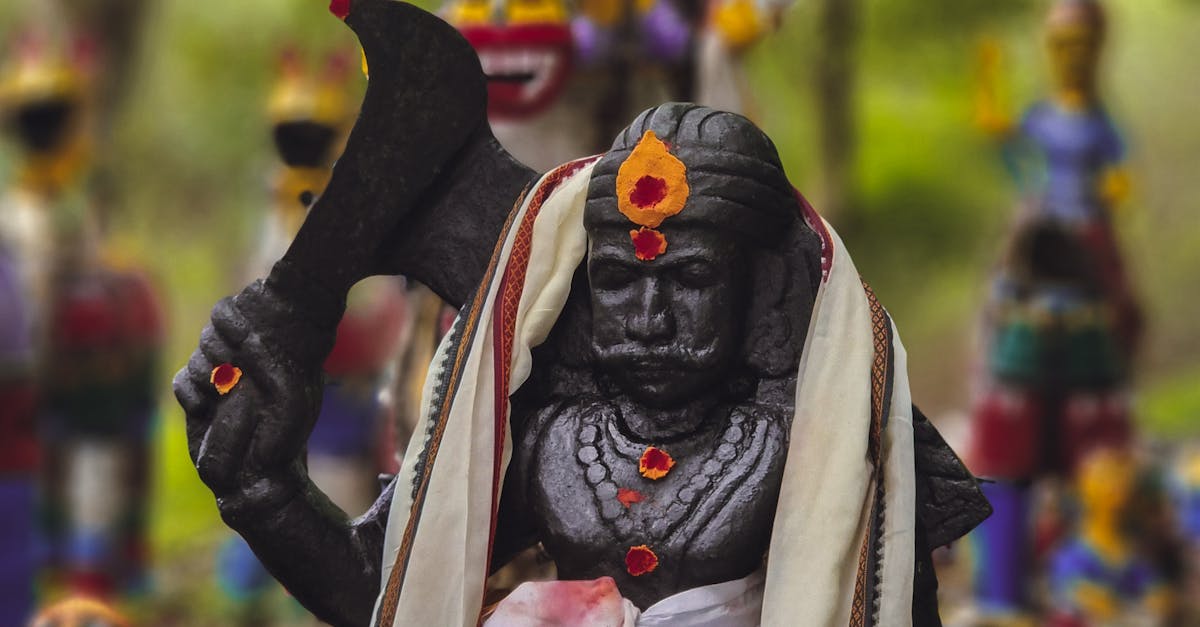
Preventive Detention
-
Preventive detention is the detention of an individual without trial or conviction. Its aim is to prevent future offenses, not punish past ones.
-
It’s a draconian measure requiring careful scrutiny, as highlighted by a recent Supreme Court case.
-
The Supreme Court quashed a Nagaland preventive detention order because the detaining authority failed to independently apply its mind. The order merely stated satisfaction with supporting documents, lacking specific grounds for detention.
-
Article 22 of the Indian Constitution provides protections for those arrested or detained, including provisions for preventive detention. It limits detention to three months unless an advisory board approves extension.
-
Detainees have a right to know the grounds of their detention, though this can be withheld in the public interest.
-
Laws permitting preventive detention exist at both the national and state levels in India (e.g., NSA, UAPA, PSA). These allow detention for periods up to 12 months without trial.
-
The detaining authority must provide opportunities for the detainee to make representations against the detention.
-
Parliament holds exclusive power to enact preventive detention laws for reasons of defense, foreign affairs, or national security. Both Parliament and state legislatures can enact such laws for public order or essential supply maintenance.
India-Mauritius Ties
-
Historical Ties: Strong historical connection with Mauritius due to Indian origin population (70%) and cultural exchange. Prime Minister Modi’s visit celebrates these long-standing ties and offers an opportunity to connect with the newly elected Prime Minister Navinchandra Ramgoolam, whose father worked with Netaji Subhas Chandra Bose.
-
People-to-People Connections: Significant Indian diaspora in Mauritius with diverse linguistic groups. India supports cultural preservation through institutions like the Mahatma Gandhi Institute and the World Hindi Secretariat.
-
Economic and Trade Cooperation: Bilateral trade reached $554 million in 2022-23. Mauritius acts as a gateway to Africa due to its African Union membership and preferential trade agreements. The Double Taxation Avoidance Agreement (DTAA) makes Mauritius a major channel for foreign investment into India.
-
Maritime Security Cooperation: Mauritius’s strategic location in the Indian Ocean is crucial. India and Mauritius collaborate on maritime security through the Colombo Security Conclave. India supports surveillance with radar stations, the Agaléga joint facility, and access to the Information Fusion Centre.
-
Geopolitical Significance: Cooperation assumes special importance as China’s influence in the Indian Ocean grows. The visit provides an opportunity to strengthen this partnership, and its importance to India’s security interests.
Madhav Park
-
58th Tiger Reserve: Madhav National Park in Madhya Pradesh has been declared India’s 58th tiger reserve. This also makes it the ninth tiger reserve in Madhya Pradesh.
- Why: Enhances tiger conservation efforts and boosts the protection status of the park.
-
Location and Background: The park is located in the Shivpuri district of the Chambal region, Madhya Pradesh. Established in 1959, it was formerly a hunting ground for the Scindia royal family.
- Why: Provides context to the location and historical significance, and clarifies its importance as a protected area.
-
Tiger Population: Currently, the reserve has five tigers, including two cubs. More tigers may be released soon. Three tigers (two females) were introduced in 2023 as part of a reintroduction project.
- Why: Highlights the ongoing conservation efforts and tiger population growth.
-
Notable Features: The park includes Sakhya Sagar and Madhav Sagar lakes, designated a Ramsar site in 2022. It also has George Castle, built in 1911.
- Why: Details unique features and recognition, indicating the park’s importance for biodiversity.
-
Fauna: The park is home to various mammals like Chinkara, Chital, Nilgai, and predators, as well as reptiles (Mugger crocodile) and migratory birds.
- Why: Demonstrates the biodiversity present in the park.
-
Government Recognition: The decision was announced by the Union Environment Minister and applauded by the Prime Minister.
- Why: Highlights the significance of the event and the importance given to wildlife conservation by the government.
Sharavathi Pumped Storage
-
Project Approval: The Sharavathi pumped-storage project received final approval from the Karnataka state government, following a prior nod from the State Wildlife Board.
-
Location: Situated on the Sharavathi River in Karnataka, known for its hydroelectric potential and the Jog Falls.
-
Environmental Concerns: The project has raised environmental concerns because of its location within the Sharavathi Lion Tailed Macaque Sanctuary.
-
Capacity and Design: The project aims to generate 2,000 MW of power through eight units, using the Talakalale and Gerusoppa reservoirs as upper and lower water storage, respectively.
-
Operation: Water will be pumped between the reservoirs to store energy during low-demand periods and released to generate power during peak demand.
-
Sharavathi River’s Importance: The Sharavathi River is a vital west-flowing river originating in the Western Ghats. Its importance lies in its water resources, hydroelectric power generation, and biodiversity.
Multiple Seats
-
The Issue: “One Candidate, Multiple Constituencies” (OCMC) allows candidates to contest elections from multiple constituencies. This practice, permitted by law, is under scrutiny.
-
Legal Framework:
- Candidates can contest a maximum of two constituencies.
- If elected to multiple seats, they must resign all but one.
- Bye-elections fill vacated seats within six months.
- Constitutional provisions (Article 101) address dual membership.
-
Challenges of OCMC:
- Favors Ruling Parties: They gain an advantage in bye-elections.
- Financial Burden: Frequent bye-elections are costly.
- Administrative Disruptions: Model Code of Conduct enforcement delays policies.
- Breach of Voter Trust: Prioritizes political interests over the electorate.
- Parachute Candidacy: Candidates lacking local connection.
- Low voter turnout: Public apathy in bye-elections.
- Organisational disruptions: Disregarding local leaders.
- Political Expediency: Enhances the possibility of getting elected
-
Proposed Reforms:
- Ban OCMC: Implement “One Election, One Candidate, One Constituency.”
- Recover Bye-Election Costs: Candidates should bear the expenses.
- Delay Bye-Elections: Extend the cooling-off period.
- Mandatory Resignation: Resign before contesting another election.
- Restrictions on sitting legislators contesting another election.
- Cooling period immediately after the election and before the dissolution of the legislature.
-
Arguments For & Against: The right to be elected is a constitutional right. However, the cons, such as low voter turnout and parachuting of candidates outweigh the advantages.
-
International Context: Other countries like Canada and Australia have restrictions.
Shingles
- Shingles, caused by the varicella-zoster virus (same virus as chickenpox), is a painful rash with blisters.
- Over 90% of adults over 50 carry the virus, yet awareness is low (56.6% of Indian participants aged 50+ know little about it).
- The rash typically appears as a band on one side of the body.
- Risk increases with age, most common in those over 50. Weakened immune systems (from chronic conditions like diabetes) increase risk.
- Shingles is not contagious, but the virus can spread chickenpox to those who haven’t had it.
- Symptoms include pain, itching, tingling, numbness, fever, headache, chills, and fatigue. Postherpetic 47.8C117.2 448 288 448 288 448s170.8 0 213.4-11.5c23.5-6.3 42-24.2 48.3-47.8 11.4-42.9 11.4-132.3 11.4-132.3s0-89.4-11.4-132.3zm-317.5 213.5V175.2l142.7 81.2-142.7 81.2z"/> Subscribe on YouTube